

Cultural Adjustment Challenges for Foreigners Returning Home
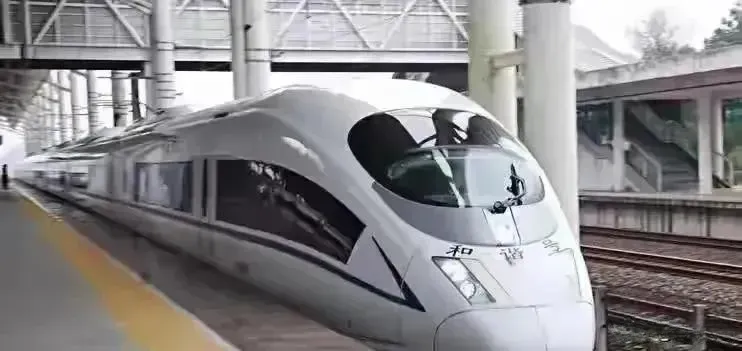
Recently, I've come across several videos of foreigners complaining about the difficulties they face after returning to their home countries from China. A French guy who stayed in Shenzhen for a couple of months called the police upon returning to Paris because he couldn't find his way in the dark streets at night. An American girl, used to jogging along the Pearl River in Guangzhou at night, was so startled by graffiti in New York subway stations that she switched to morning runs. German engineer Mark said that the high-speed train from Shanghai to Beijing is fast and has WiFi, whereas traveling from Berlin to Munich requires a transfer and is often delayed by two hours.

Statistics show that the nighttime safety index in Beijing and Shanghai is significantly higher than in New York and London. Ali from Dubai, after living in Xi'an for a long time, checked his door lock five times on his first night back in Dubai. He said he could leave his phone on the table while eating barbecue at midnight in Xi'an, but couldn't sleep well back home. In Guangzhou, you can have barbecue at 3 a.m. without any issues, while the robbery rate in Paris is six times that of Shanghai.
Japanese tourist Tanaka used a QR code to take the subway in Hangzhou, but was met with confusion from staff when he took out his phone in Tokyo. British blogger Kurt could pay with his phone at a Chengdu market, but was frustrated to find a cash-only supermarket in London. In China, 89% of people use mobile payments compared to just 28% in the U.S. Russian Anna noted that even beggars in Shenzhen have QR codes, while in Moscow she still needs coins to buy a subway ticket.

However, there are some issues. An American man in Chengdu nearly ended up sleeping on the street because he couldn't use the health code. Although deliveries arrive the next day, news about delivery riders running red lights frequently trends. A German journalist mentioned that a lost wallet in Beijing can be found within ten minutes, but at the cost of losing anonymity.

Recently, a Spanish netizen aptly described living in China as being like playing on easy mode, only to find their home country to be on hell difficulty. Data supports this, showing that robbery incidents in Tokyo are three times those in Shanghai, and 70% of robberies in Thailand occur because victims carry cash. While foreigners struggle to readjust after returning home, China also needs to consider how to balance safety and efficiency with privacy and aging population issues.