

A major incident has occurred. Russia has launched a “decapitation” operation, Trump is furious, and Ukraine is beginning to panic.
For Ukraine, which is deeply embroiled in war, August 2025 began amid a hail of artillery fire and smoke. tensions on the Russia-Ukraine battlefield escalated once again.
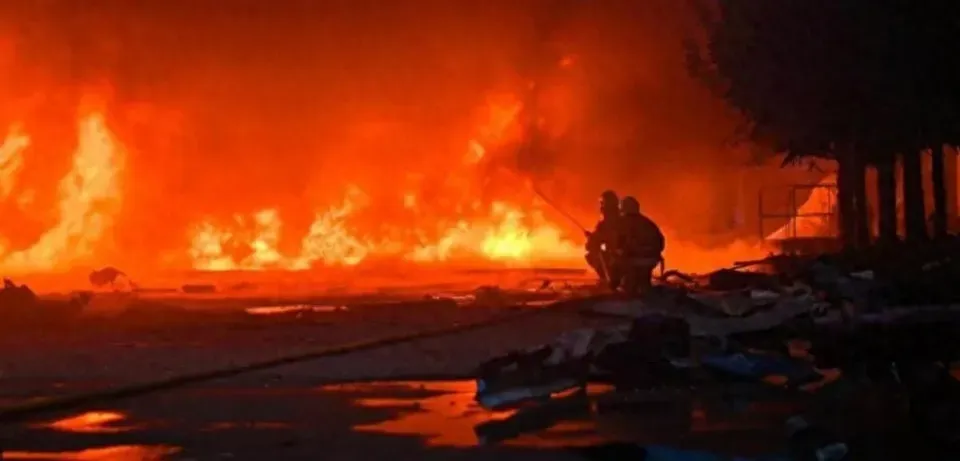
This time, Russia struck hard, launching a “decapitation” operation. Over 300 drones and eight missiles entered Ukrainian airspace, targeting regions such as Dnipropetrovsk Oblast, Poltava Oblast, Sumy Oblast, Mykolaiv Oblast, Kyiv Oblast, and the city of Kyiv.
Among these, the capital Kyiv remained the primary target of this “decapitation” operation.
According to reports, between 11 p.m. on July 30 and 5 a.m. on July 31, reporters heard dozens of loud explosions, clearly indicating the intensity of the attack.
At this point, it had been only a week since the conclusion of the third round of Russia-Ukraine negotiations. Why did Putin launch such a large-scale attack again?
As we all know, even before Trump became president, he boasted that he would resolve the Russia-Ukraine conflict by 2025. After taking office, he repeatedly made bold claims, saying he would be the one to end the Russia-Ukraine war and even hinted at aiming for the Nobel Peace Prize. To this end, he volunteered to act as a “mediator” in the Russia-Ukraine conflict, engaging in talks with Putin and meetings with Zelensky, appearing to be extremely busy. What was the result? More than half a year has passed, and not only has the Russia-Ukraine war not ended, it has escalated.
Trump would have been better off not mediating at all. The more he mediated, the more chaotic the situation became, the more it angered Putin, and the more it frustrated himself.
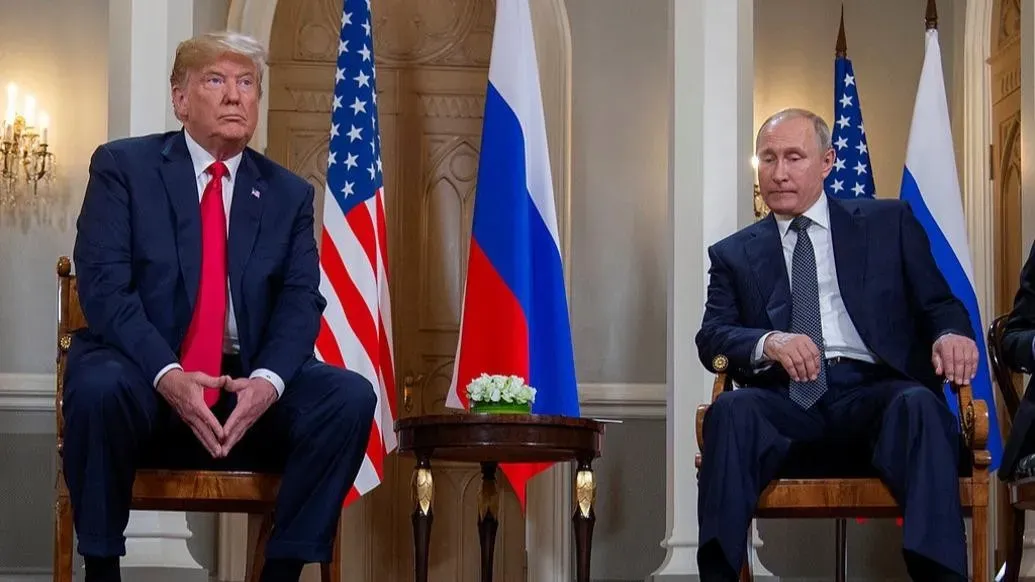
Trump probably hasn't experienced such hardship in his entire life. He has had numerous conversations with Putin, but there has been no progress. According to media reports, Trump has repeatedly complained to the media, saying that he and Putin have discussed many ideas on how to accomplish this task, but the results have been disappointing.
"Every time I hang up the phone, I say, ‘Well, that was a pleasant conversation.’ Then missiles are fired at Kyiv or other cities. After this happens three or four times, you realize that the previous conversations were meaningless."
You can almost feel Trump's frustration through the screen.
Isn't that exactly what happened? To take a recent example, consider the attack on Kyiv at the beginning of last month. There were two rounds of attacks, with Kyiv being bombed for over 20 hours, and a Ukrainian official was assassinated.
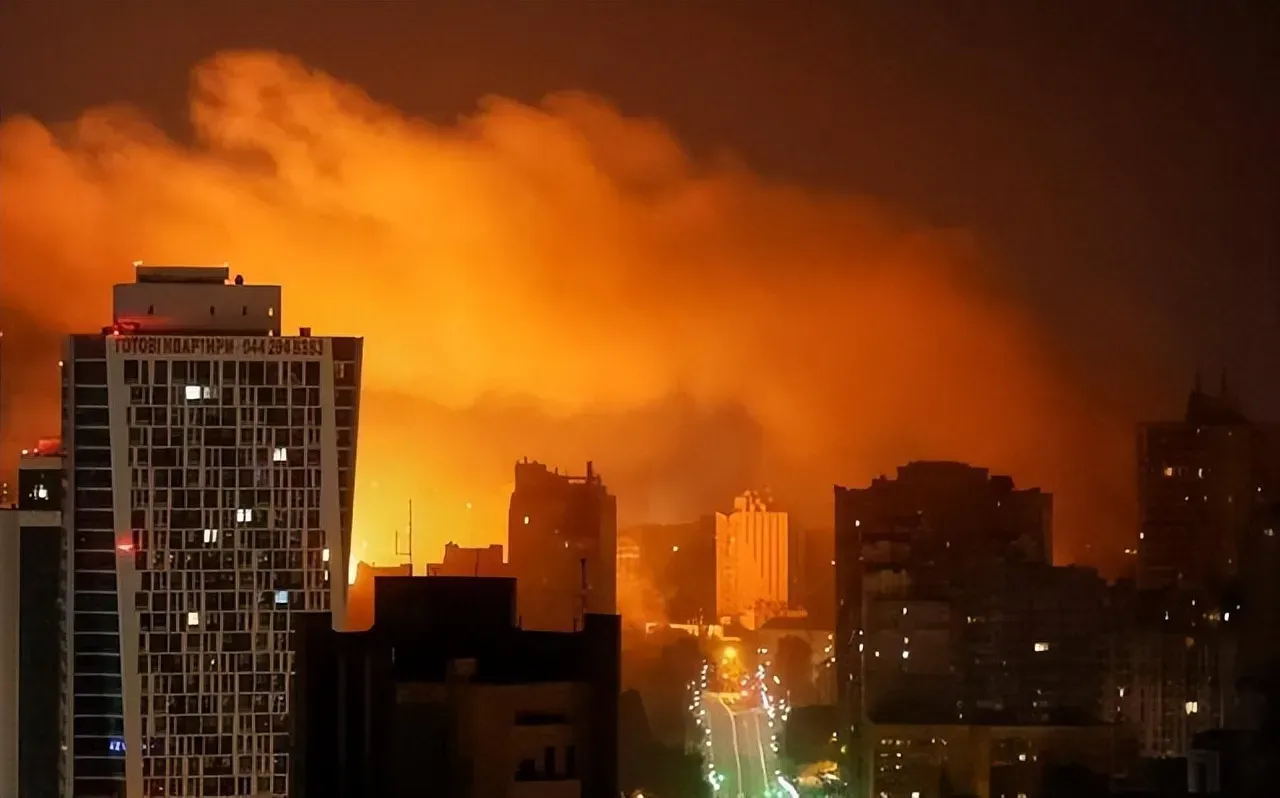
There are two contexts to this attack. First, the deputy commander of the Russian Navy and dozens of military commanders were killed by Ukrainian missiles. Second, Trump made a harsh remark, saying he was “very dissatisfied” with Putin.
Putin responded, “You're not satisfied with that? There's more to come!” Immediately, missiles tore through the night sky over Kyiv. Now, Putin's logic is that if Trump's words make him unhappy or the terms of the deal are unsatisfactory, he will strike Ukraine.
The root cause of the attack two days ago lies here.
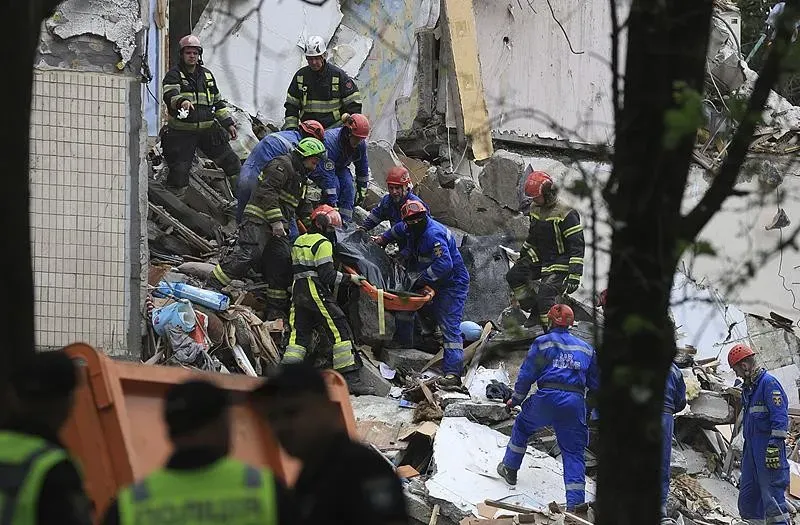
According to Xinhua News Agency, the attack resulted in 13 deaths, 135 injuries, and over 100 damaged buildings in Kyiv, with some missiles even striking residential buildings. The devastation in Kyiv is a clear indication of Putin's anger.
So, how did Trump manage to upset Putin this time? The story begins on July 28.
On July 28, during his visit to Scotland, Trump spoke about Russia, saying he was “very disappointed in Putin” and that he was “no longer interested in talking to Russian President Putin.”
This was a turning point. Prior to this, Trump had been attempting to resolve the Russia-Ukraine conflict through private talks with Putin rather than through official channels, reflecting his desire to resolve the conflict at the lowest possible cost. At this point, he was still harboring the illusion of “having his cake and eating it too”—seeking to resolve the conflict while maintaining friendly relations with Russia.
As a result, Trump adopted a conciliatory stance, presenting himself as someone willing to negotiate on any issue, even going so far as to pressure Ukraine and betray his allies.
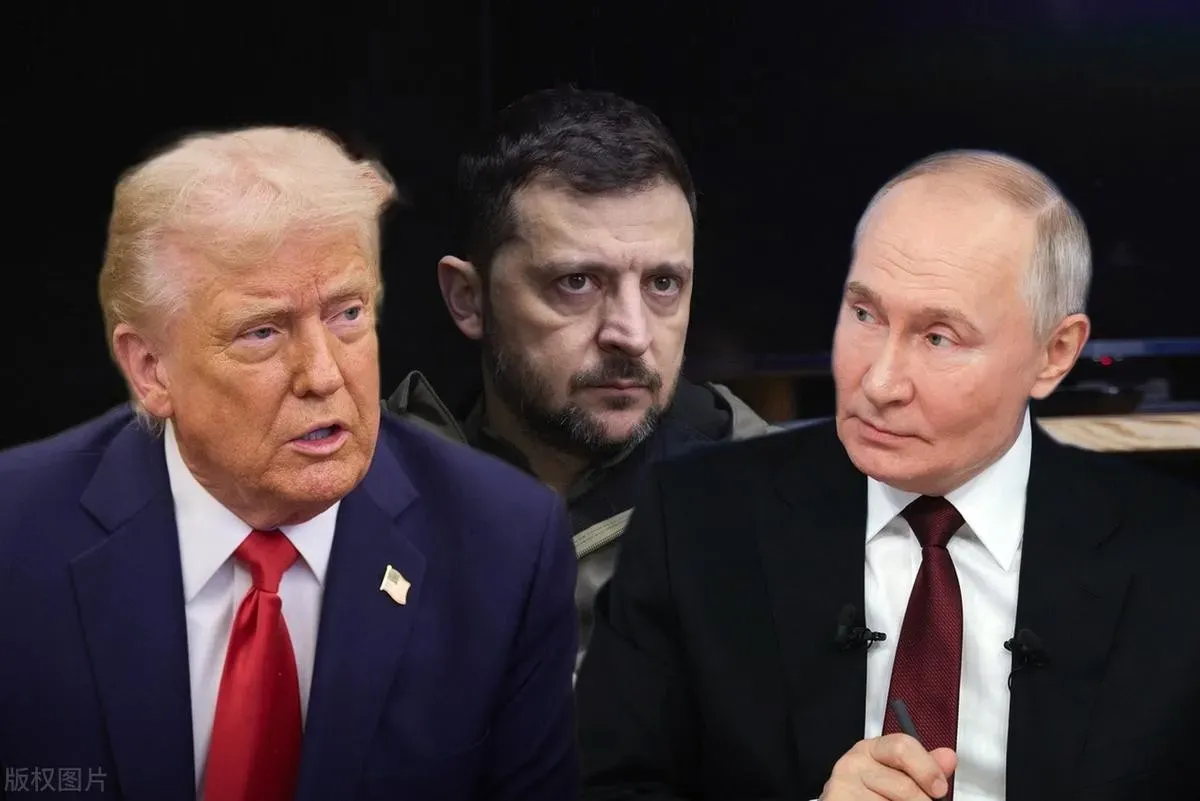
However, as Trump and Putin's communications repeatedly hit roadblocks and the most cost-effective solutions were repeatedly rejected, Trump realized that this approach was not working. This also led him to gradually lose patience with Russia.
Since July, Trump has made his impatience clear, eager to end the war that has dragged on for years, and has repeatedly sent strong signals.
On July 15, Trump issued an ultimatum to Putin, demanding that he end the war within 50 days. If Putin fails to do so, the United States will impose “very severe” tariffs and secondary tariffs on Russia. At that point, all countries conducting business with Russia will face secondary tariffs as high as 100%.
Meanwhile, the United States will provide military aid to Ukraine through NATO, including the Patriot air defense missile system.
Trump's warning was useless. In fact, Putin accelerated the pace of his summer offensive, deploying 160,000 troops in Pokrovsk and launching the largest-scale airstrikes, bombarding Ukraine repeatedly, effectively responding to Trump's threats from afar.
Trump was nearly driven to the brink of frustration. On July 28, Trump confided to British Prime Minister Boris Johnson that he would set a new deadline.
“I intend to set a new deadline starting today, approximately 10 to 12 days. There is no reason to wait any longer... We simply see no progress.”
The next day, Trump set what he called a final deadline on the plane flying back to the US. The previous 50-day ceasefire period was shortened to 10 days, starting from the 29th.
This means that Putin must reach a ceasefire agreement with Ukraine by August 8. Otherwise, Russia will face secondary sanctions from the US and Europe.
“You know, we will impose tariffs. I don't know if this will affect Russia, because he clearly wants to continue the war... but we will impose tariffs, which may or may not affect them, but tariffs may.”
At this point, it is clear that Trump really has no other options. However, it is also evident that Trump's latest “ultimatum” has backfired.
As soon as Trump's words were spoken, Putin immediately put the “decapitation” operation on the agenda and swiftly launched an attack on Ukraine. It is worth noting that this attack was carried out without delay, beginning on the evening of the 30th.
Furthermore, Russia issued a “warning” prior to the attack.
Dmitry Medvedev, Deputy Chairman of the Russian Federation Security Council, posted a warning on social media, advising Trump not to play the “ultimatum” game with Russia. Russia is neither Israel nor Iran; whether it's 50 days or 10 days, each new “ultimatum” is another step toward war.
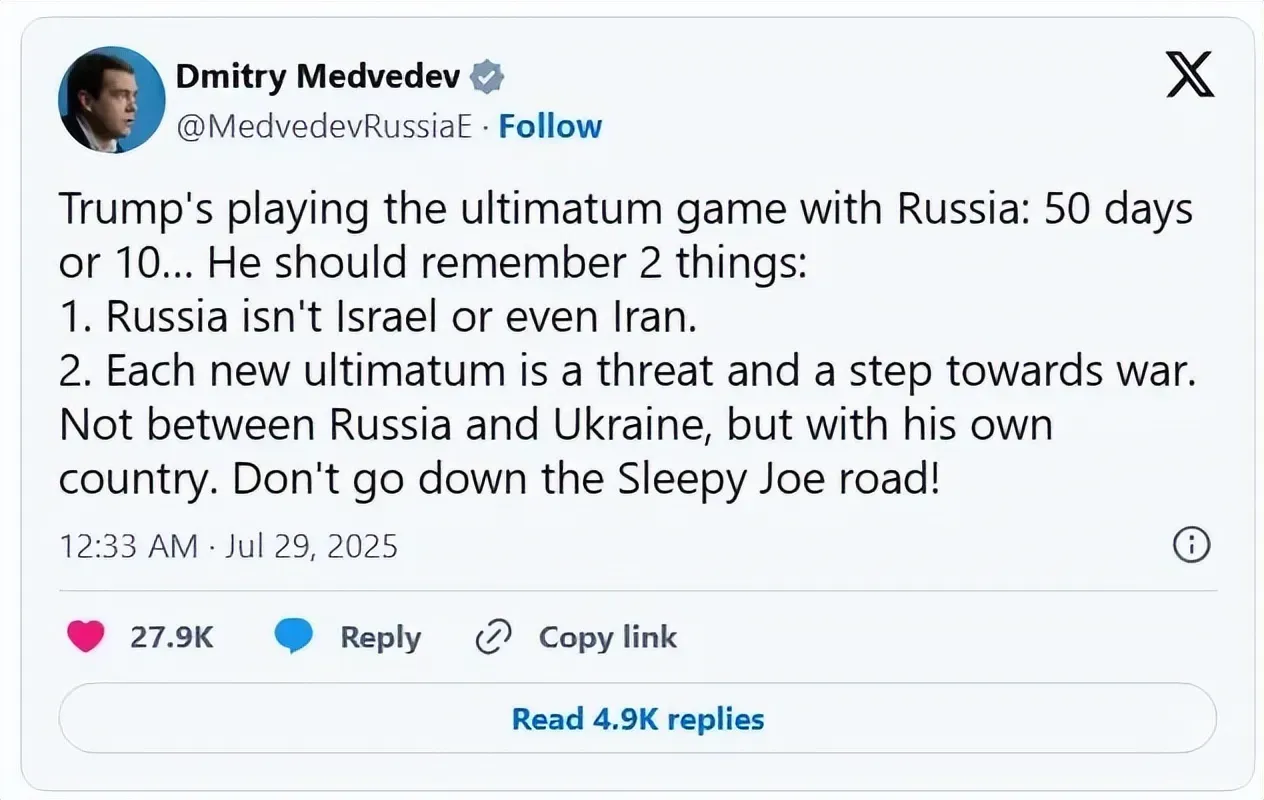
Next, Russia's attack on the whole of Ukraine proved Medvedev's words to be true.
Two consecutive “ultimatums” resulted in the bombing of Ukraine. I wonder how Trump feels about this. Will he do the same thing again next time?
In fact, smart people know that at this stage of the Russia-Ukraine war, Russia is already in a difficult position. A war concerning the fate of a nation would never yield to a mere threat from Trump. After all, if a nation cannot secure its position on the battlefield, it certainly cannot do so at the negotiating table.
Moreover, from the current battlefield situation, the Russian military holds the advantage. Trump cannot expect Russia to cease hostilities without offering additional concessions—it is simply unrealistic. Resolving the conflict within ten days is equally impossible.
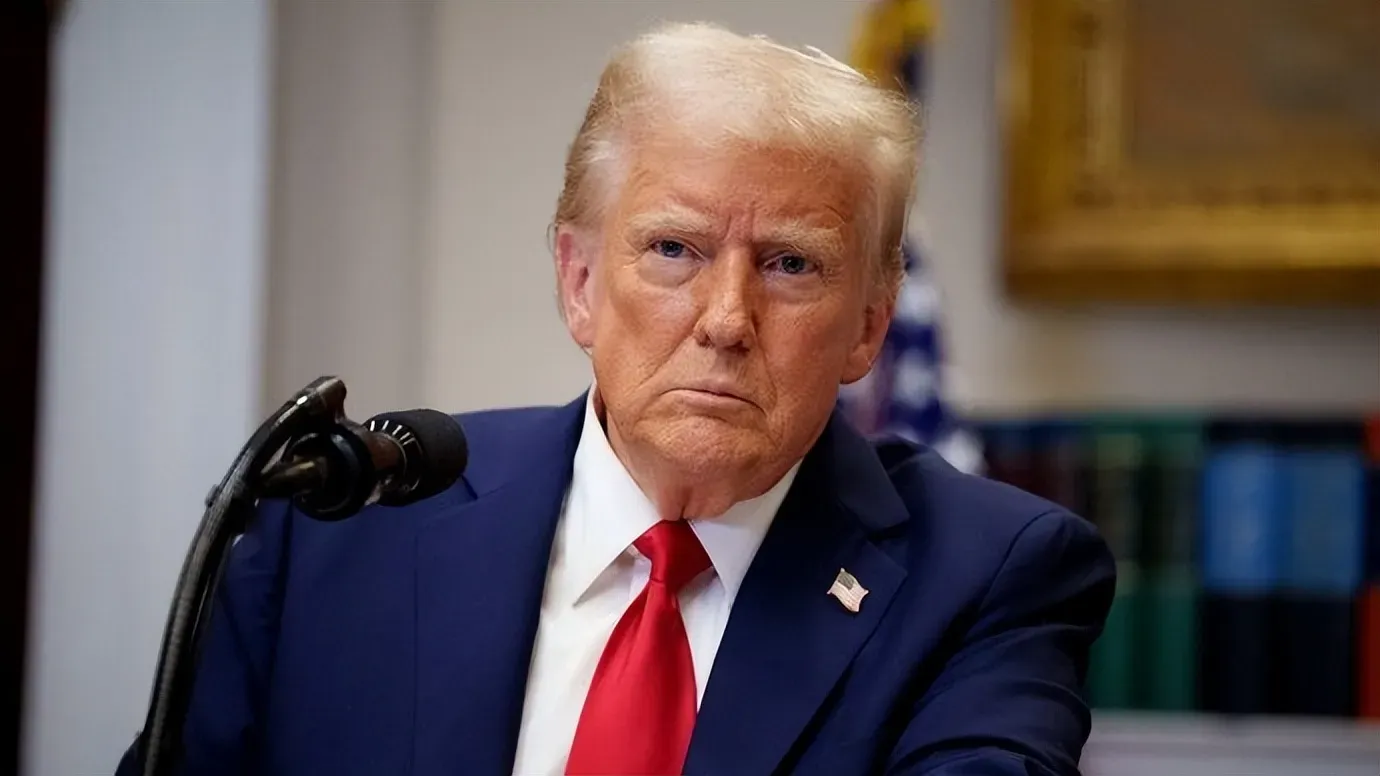
Trump may well understand this logic. However, the US cannot afford to continue, and Ukraine cannot wait any longer. The Russian military offensive is too intense, and the pressure on Ukrainian forces at the front lines is too great. If the fighting continues, Ukraine will truly be lost. Unless a ceasefire agreement is reached between Russia and Ukraine before then, or the US and Europe exhaust their resources to provide Ukraine with large-scale military support.
In any case, before the war ends, no one—let alone the United States—can reverse the situation.
The Russia-Ukraine conflict once again reminds us that starting a war is easy, but stopping one is difficult. The United States and Europe can easily become the ones to pull the trigger, but once the war machine is set in motion, no one has the right to hit the brakes.
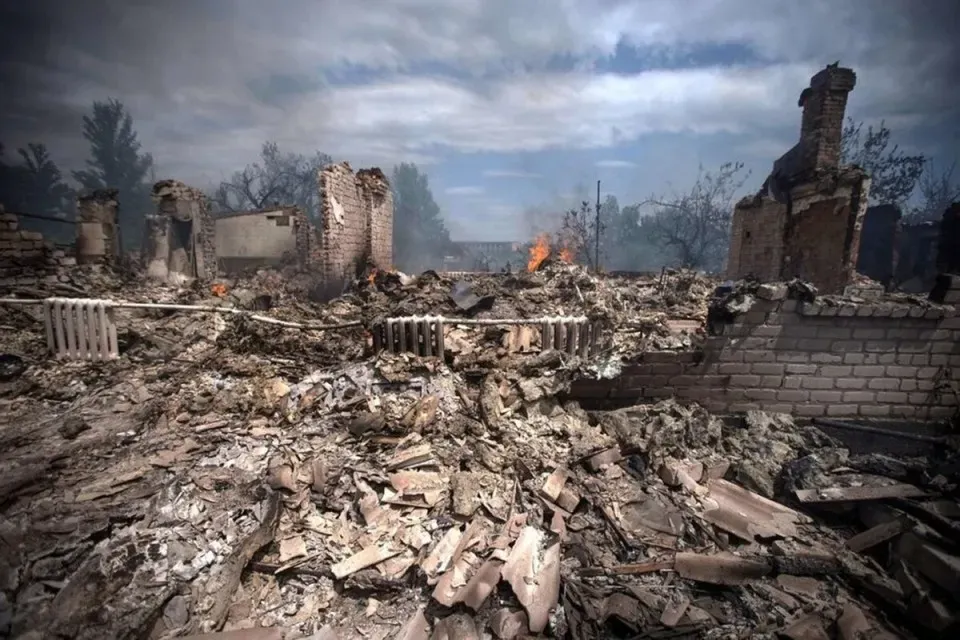
2025 is already halfway through, and no one knows when the Russia-Ukraine conflict will end. But regardless, war is a devil that no one wants. Setting aside political positions, and simply from the perspective of a community with a shared future for mankind, I sincerely hope that this protracted war will end soon and that peace will come sooner.