

Don't save face for him! Did Yoon Suk-yeol take off his clothes and lie on the ground to resist arrest because he realized what would happen to him?
Yoon Suk-yeol is back in the international headlines, and once again in a disgraceful manner.
Let's first take a look at why Yoon Suk-yeol was arrested.
1. Arrest and imprisonment
The main reasons why former South Korean President Yoon Suk-yeol ended up being arrested by the special prosecution team were two major scandals: his wife Kim Geon-hee's involvement in a case and the “December 3rd Martial Law Order” incident.
These two incidents left him deeply embroiled in legal investigations after stepping down.
First, the “December 3 Martial Law Order” incident refers to the sudden announcement by Yoon Suk-yeol, in his capacity as president, on the evening of December 3, 2024, declaring a nationwide state of martial law, which caused a major uproar.
In a televised address, Yoon accused the opposition party, which held a majority in the National Assembly at the time, of attempting to overthrow the government, using this as a pretext to deploy military forces and station armed troops on the streets of Seoul.
However, this attempt lasted only a few hours: the National Assembly held an emergency vote that night and unanimously rejected his martial law order, swiftly halting Yoon's extraordinary measures.
Yoon Suk-yeol's “martial law” was viewed as a reckless and unconstitutional abuse of power, plunging South Korea's political arena into chaos.
The result was that Yoon Suk-yeol was impeached by the National Assembly, and in April of the following year, the Constitutional Court of South Korea formally ruled to remove him from office as president. He became the first president in South Korea's constitutional history to be removed from office for attempting to impose martial law.
Shortly after his removal, he was formally charged by the prosecution with criminal offenses including rebellion (internal insurrection) and detained pending trial. Rebellion is an extremely serious offense in South Korea, punishable by life imprisonment or even the death penalty.
Secondly, the Kim Geon-hee case was another key lead that prompted the special prosecution team to intervene.
Kim Geun-hee is Yoon Suk-yeol's wife and former first lady. The opposition party accused her of interfering in state affairs during Yoon Suk-yeol's presidency, allegedly influencing political and personnel decisions in an improper manner, effectively engaging in “behind-the-scenes governance.”
In 2023, South Korea enacted the “Kim Geun-hee Special Prosecutor Act” to specifically investigate various scandals surrounding Kim Geun-hee.
One of the core allegations is that Yoon Suk-yeol and his wife are accused of exerting improper influence on the candidate nomination process of the then-ruling conservative party prior to the 2022 parliamentary elections.
In other words, the special prosecution team suspects that Yoon Suk-yeol and his wife abused their power to interfere in the party's nomination process for political gain.
If proven true, this allegation would involve election fraud or corruption. In addition to the election nomination case, the special investigation team is also looking into other illegal activities that Kim Gun-hee may have been involved in, including her personal business scandals and behind-the-scenes influence.
It can be said that the “Kim Gun-hee case” has put Yoon Suk-yeol in a second line of judicial risk—this is a parallel but independent investigation track from the martial law rebellion case, and it is also the direct reason why the special investigation team took coercive measures against Yoon Suk-yeol this time.
In summary, Yoon Suk-yeol's arrest by the special prosecution team is, on the one hand, to investigate the serious crimes of rebellion and abuse of power he may have committed during the “December 3 Martial Law Order,” and on the other hand, to probe the corruption scandals involving his wife, such as alleged quid pro quo deals and behind-the-scenes political interference.
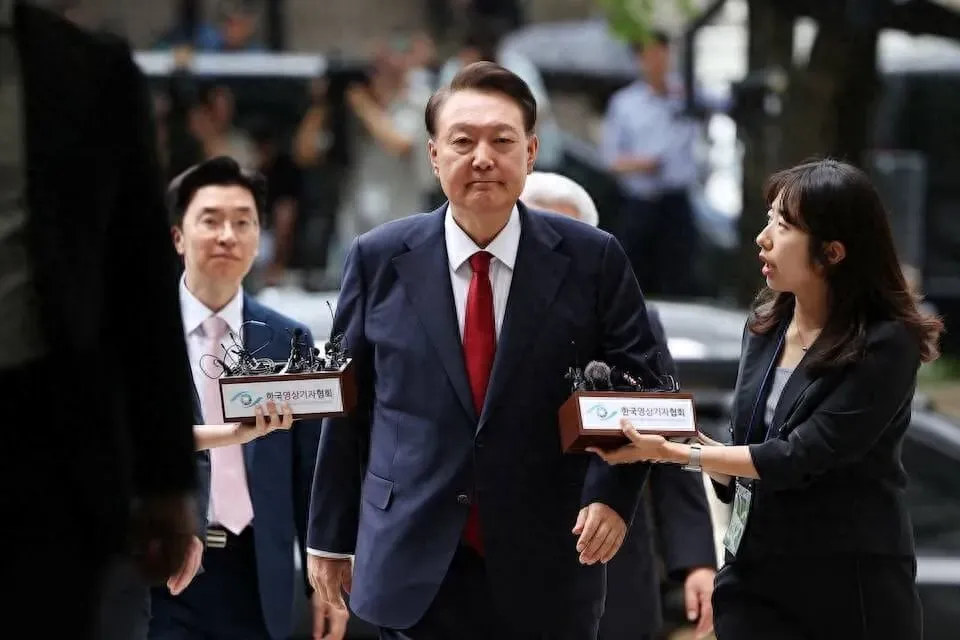
These charges have reduced him from a head of state to a prisoner.
II. Behavior in Prison
Since his detention, Yoon Suk-yeol has been defiant in prison, repeatedly refusing to cooperate with investigations and delaying legal proceedings on the grounds of health.
According to reports, the special prosecution team summoned Yoon Suk-yeol twice in July to attend interrogations, but he ignored the summons and refused to appear.
Yoon Suk-yeol's side claimed publicly that he was not intentionally defying the law, but rather was “unable” to attend due to health reasons.
However, the special prosecution team does not accept this explanation. On August 1, an assistant prosecutor from the special prosecution team told the media that during actual interactions, Yoon Suk-yeol appeared to be in good health and “looked very robust.”
This suggests that Yoon Suk-yeol's claims of being too ill to attend may be exaggerated, aimed at evading legal proceedings.
In addition to refusing to appear in court on health grounds, Yoon Suk-yeol has adopted a generally negative attitude toward the judicial investigation.
He has repeatedly claimed that the current series of investigations are political retaliation, amounting to a “political witch hunt” targeting him and his family.
As a conservative, Yoon Suk-yeol believes that these investigations, led by the liberal-leaning new government, are politically motivated and aimed at destroying his reputation and the morale of the conservative camp.
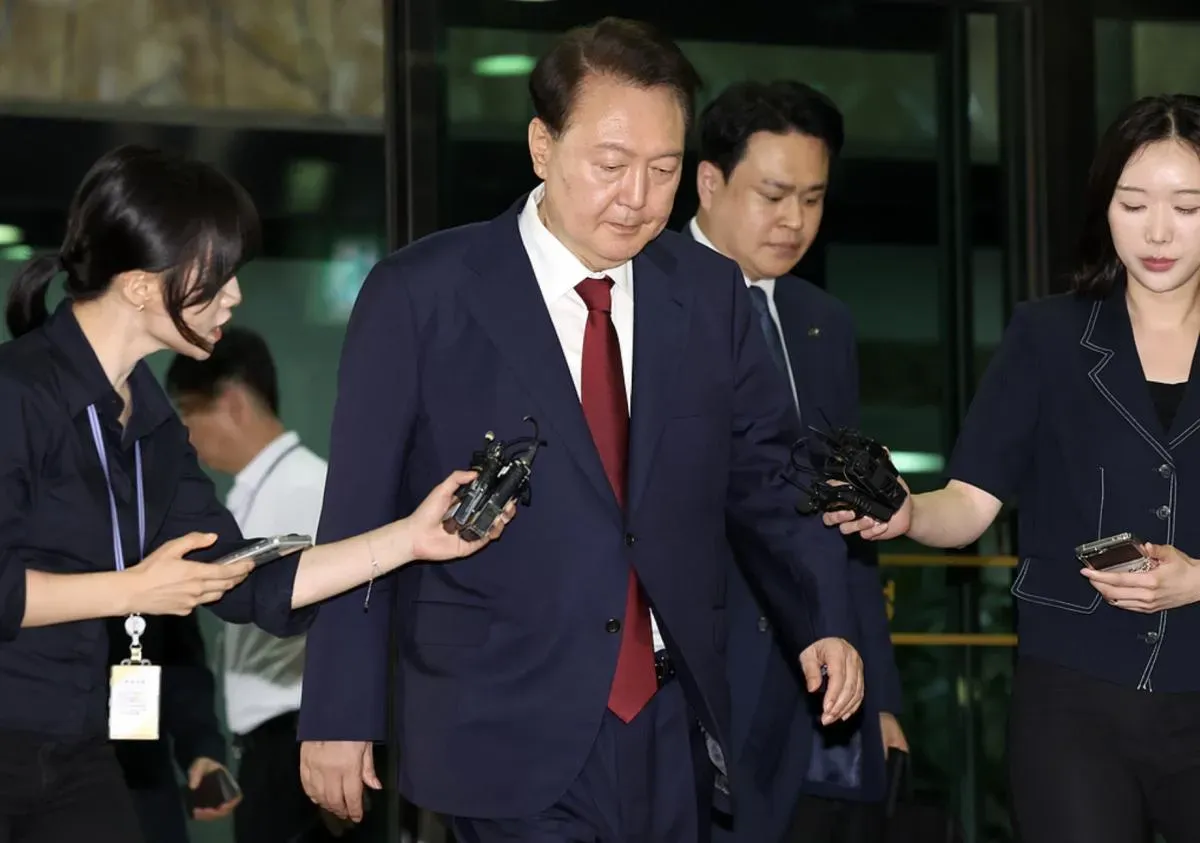
Therefore, he refused to appear before the special investigation team, clearly expressing his protest against the legitimacy of the investigation.
While in prison, Yoon Suk-yeol also employed delaying tactics, such as missing court hearings and submitting medical certificates to request postponements.
It is worth noting that Yoon Suk-yeol himself comes from the prosecution system and was once known for his impartiality. However, when the investigation turned against him, he chose to resist and refuse to cooperate.
This stark contrast not only caused a stir in South Korean public opinion but also set the stage for the special prosecution team to take further coercive measures.
III. Stripping and lying on the ground to resist arrest
On the morning of August 1, 2025, the special prosecution team decided to enforce the arrest warrant against Yoon Suk-yeol, who had repeatedly refused to cooperate with the investigation.
Assistant Prosecutor Oh Jung-hee led the investigative team to the Seoul Detention Center in Iwol City, Gyeonggi Province, to escort Yoon Suk-yeol to the special prosecution team's office for questioning.
For this purpose, the special prosecution team had previously obtained an arrest warrant from the court, authorizing them to forcibly remove Yoon Suk-yeol if necessary.
Don't save face for him! Did Yoon Suk-yeol strip naked and lie on the ground to resist arrest because he realized what his fate would be?
2025-08-02 00:25 · Cat's Eye View of History
Yoon Suk-yeol is back in the international headlines, and in a despicable way.
Let's first look at why Yoon Suk-yeol was arrested.
1. Arrest and Imprisonment
The former South Korean president, Yoon Suk-yeol, ended up being arrested by the Special Prosecutor’s Office primarily due to two major scandals: his wife Kim Geon-hee’s involvement in a case and the “December 3 Martial Law Order” incident.
These two incidents left him deeply embroiled in legal investigations after stepping down.
First, the “December 3 Martial Law Decree” incident refers to the sudden announcement by Yoon Suk-yeol, in his capacity as president, on the evening of December 3, 2024, that the nation was under martial law, sparking a major uproar.
In a televised address, Yoon Suk-yeol accused the opposition party, which held a majority in the National Assembly at the time, of attempting to overthrow the government, using this as a pretext to deploy military forces and station armed troops on the streets of Seoul.
However, this attempt lasted only a few hours: the National Assembly held an emergency vote that night and unanimously rejected his martial law order, swiftly halting Yoon Suk-yeol's extraordinary measures.
Yoon Suk-yeol's “martial law” was viewed as a reckless and unconstitutional abuse of power, plunging South Korea's political arena into chaos.
As a result, Yoon Suk-yeol was impeached by the National Assembly, and in April of the following year, the South Korean Constitutional Court formally ruled to remove him from the presidency, making him the first president in South Korea's constitutional history to be ousted for attempting to impose martial law.
Shortly after his removal, he was formally investigated by the prosecution on charges of rebellion (internal insurrection) and other criminal offenses, and was detained pending trial. Rebellion is an extremely serious crime in South Korea, punishable by life imprisonment or even the death penalty.
Secondly, the Kim Geon-hee case was another key lead that prompted the special prosecution team to intervene.
Kim Geun-hee is Yoon Suk-yeol's wife and former first lady. The opposition party accused her of interfering in state affairs during Yoon Suk-yeol's presidency, allegedly influencing political and personnel decisions in an improper manner, effectively engaging in “behind-the-scenes governance.”
In 2023, South Korea enacted the “Kim Geun-hee Special Prosecutor Act” to specifically investigate various scandals surrounding Kim Geun-hee.
One of the core allegations is that Yoon Suk-yeol and his wife are accused of exerting improper influence on the candidate nomination process of the then-ruling conservative party prior to the 2022 parliamentary elections.
In other words, the special prosecution team suspects that Yoon Suk-yeol and his wife abused their power to interfere in the party's nomination process for political gain.
If proven true, this allegation would involve election fraud or corruption. In addition to the election nomination case, the special investigation team is also looking into other illegal activities that Kim Gun-hee may have been involved in, including her personal business scandals and behind-the-scenes influence.
It can be said that the “Kim Gun-hee case” has put Yoon Suk-yeol in a second line of judicial risk—this is a parallel but independent investigation track from the martial law rebellion case, and it is also the direct reason why the special investigation team took coercive measures against Yoon Suk-yeol this time.
In summary, Yoon Suk-yeol's arrest by the special prosecution team is, on the one hand, to investigate the serious crimes of rebellion and abuse of power he may have committed during the “December 3 Martial Law Order,” and on the other hand, to investigate the corruption scandals involving his wife, such as alleged quid pro quo deals and behind-the-scenes political interference.
These allegations have reduced him from the head of state to a prisoner.
II. Behavior in Prison
Since his detention, Yoon Suk-yeol has adopted a defiant stance in prison, repeatedly refusing to cooperate with the investigation and delaying legal proceedings on the grounds of health issues.
According to reports, the special prosecution team summoned Yoon Suk-yeol twice in July to attend interrogations, but he ignored the summons and refused to appear.
Yoon Suk-yeol's camp has claimed that he is not intentionally defying the law, but rather unable to attend due to health reasons.
However, the special prosecution team does not accept this claim. On August 1, an assistant prosecutor from the special prosecution team told the media that during actual interactions, Yoon Suk-yeol appeared to be in good health and “looked very robust.”
This suggests that Yoon Suk-yeol's claim of being too ill to attend may be an exaggeration aimed at evading legal proceedings.
In addition to refusing to appear in court on health grounds, Yoon Suk-yeol has adopted a generally negative attitude toward the judicial investigation.
He has repeatedly claimed that the current series of investigations are political retaliation, amounting to a “political witch hunt” targeting him and his family.
As a conservative, Yoon Suk-yeol believes that these investigations, led by the liberal-leaning new government, are politically motivated and aimed at destroying his reputation and the morale of the conservative camp.
Therefore, his refusal to appear before the special prosecution team is clearly intended to protest the legitimacy of the investigation.
While in prison, Yoon Suk-yeol has also employed delay tactics, such as missing court hearings and submitting medical certificates to request postponements.
It is worth noting that Yoon Suk-yeol himself comes from the prosecutorial system and was once known for his impartiality. However, when the investigation turned against him, he chose to resist and refuse to cooperate.
This stark contrast not only shocked South Korean public opinion but also laid the groundwork for the special prosecution team to take further coercive measures.
III. Stripping and lying on the ground to resist arrest
On the morning of August 1, 2025, the special prosecution team decided to enforce the arrest warrant against Yoon Suk-yeol, who had repeatedly refused to cooperate with the investigation.
Assistant Prosecutor Woo Jung-hee led the investigative team to the Seoul Detention Center in Iwol City, Gyeonggi Province, to escort Yoon Suk-yeol to the special prosecution team's office for questioning.
For this moment, the Special Prosecutor's Office had previously obtained an arrest warrant from the court, authorizing the forcible removal of Yoon Suk-yeol if necessary.
However, when the investigators entered Yoon Suk-yeol's solitary confinement cell, the scene was shocking: Yoon Suk-yeol had removed his prison garb, wearing only a T-shirt and underwear, and was lying stiffly on the floor.
He stubbornly resisted the transfer in this manner, refusing to answer questions or stand up, causing the arrest operation to stall.
Investigators repeatedly urged Yoon Suk-yeol to cooperate on the spot.
According to details later disclosed, Special Prosecutors' Office personnel requested Yoon Suk-yeol four times over a two-hour period to put on his prison uniform and cooperate with the execution of the arrest warrant, with each request spaced 20 to 30 minutes apart.
However, Yoon Suk-yeol remained motionless, maintaining his naked supine position and refusing to comply. “We took into account his status as a former president and repeatedly urged him to cooperate voluntarily,” Prosecutor Oh Jung-hee recounted. “But the suspect continued to lie on the ground, refusing to put on the prison uniform.”
Yoon Suk-yeol's passive resistance forced the special prosecution team to abandon the arrest operation for the day. About two hours later, the special prosecution team announced the suspension of the operation and withdrew from the detention center.
Before leaving, the investigators solemnly warned Yoon Suk-yeol: “Next time we come, we will not hesitate to use necessary physical force.” It is reported that 50 minutes after the special prosecution team left, Yoon Suk-yeol put his clothes back on and met with his lawyer, a detail that further fueled public suspicion of his “feigning illness to resist the law.”
Yoon Suk-yeol's dramatic act of stripping and lying on the ground to resist arrest was immediately interpreted by public opinion as an open challenge to the rule of law.
A former president who once championed the banner of “law and common sense” now resisting law enforcement in this manner carries symbolic significance that is worth pondering.
The “stripping and resisting arrest” incident on August 1 quickly made headlines across major media outlets, sparking strong reactions across South Korean society.
Most public opinion has condemned this move, arguing that Yoon Suk-yeol's actions are unbecoming and a desecration of the presidential office and national dignity.
Many media outlets have commented that Yoon Suk-yeol's defiant stance against the law is both absurd and pitiful.
Some netizens even harshly criticized him for having no sense of shame, urging the judicial authorities to “help him maintain his dignity if he won't do it himself!”
On social media, Yoon Suk-yeol's actions were mockingly referred to as “lying down to resist the law,” with netizens criticizing his “passive resistance” as damaging to the dignity of a former South Korean president.
It can be said that Yoon Suk-yeol intended to use this to highlight the “unfair treatment” he had suffered, but it backfired, with the public expressing shock and disgust at his actions.
Even his defense lawyer, speaking out afterward, sounded lacking in confidence, only able to criticize the special prosecution team for publicly revealing his “unseemly” attire, which he claimed was a “trampling of the suspect's dignity.”
However, Yoon Suk-yeol's actions have prompted South Korean citizens to rethink the relationship between power and the law: even the highest leader, once he violates the law, will ultimately face punishment. Yoon Suk-yeol's extreme refusal to surrender not only revealed his desperate situation and willingness to risk everything but also highlighted the South Korean judiciary's firm stance on advancing investigations without fear of power. As South Korean media commentaries put it: “If he refuses to step down gracefully, then the law will help him ‘gracefully’ face justice.”
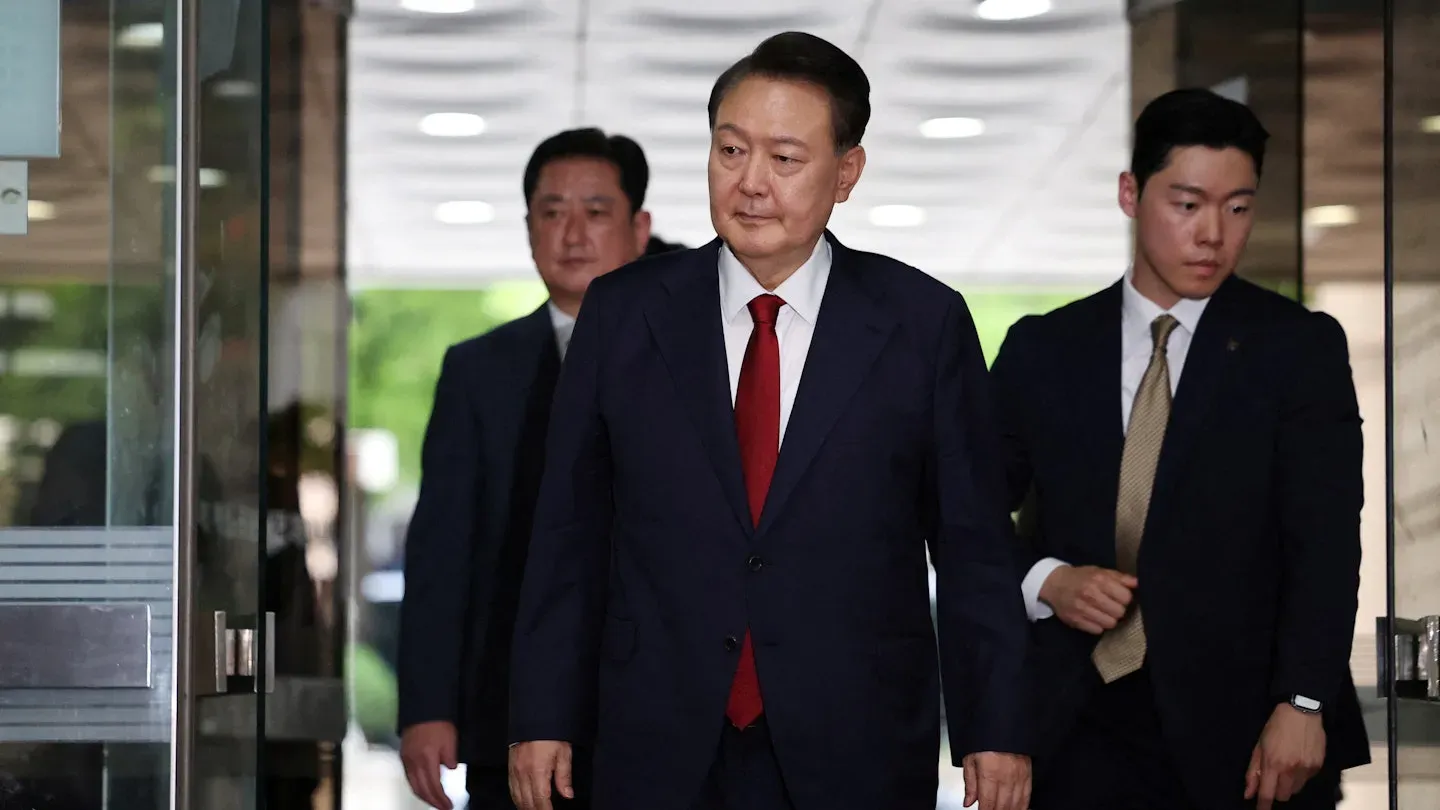
4. Anticipating his political downfall?
Yoon Suk-yeol chose to resist arrest in a shocking manner by stripping naked and lying on the ground, sparking widespread speculation about his motives. A common view is that this action reflects Yoon Suk-yeol's clear anticipation and deep fear of his political downfall.
There are several reasons for this view.
First, a delaying tactic, a desperate gamble. Yoon Suk-yeol is fully aware that the charges against him are extremely serious—if convicted of rebellion, he could face life imprisonment or even the death penalty.
Second, seeking sympathy, a strategic retreat. Yoon Suk-yeol may have attempted to portray himself as a “victim of persecution,” but this backfired, drawing widespread condemnation from netizens around the world.
Third, psychological imbalance and a “what's the point” attitude. From a psychological perspective, Yoon Suk-yeol's choice may reflect deep feelings of loss and resentment.
Fourth, fully aware of the outcome but refusing to accept it—this is the most important reason.
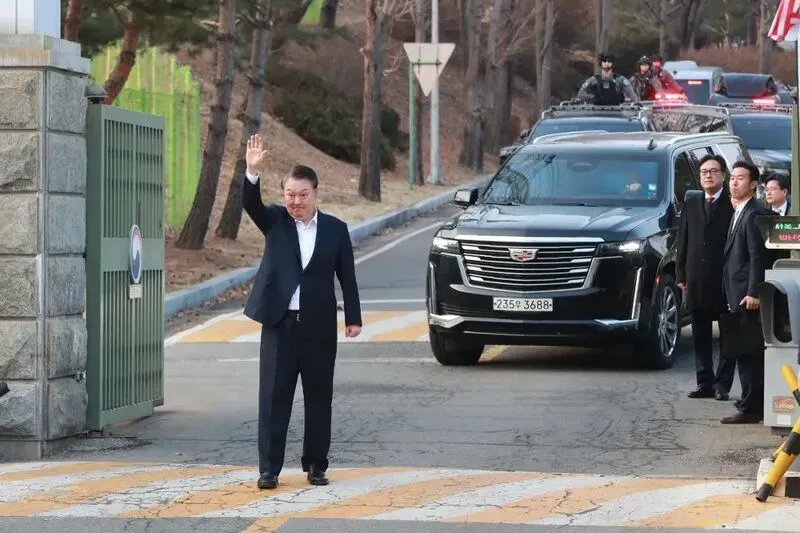
Yoon Suk-yeol may have already foreseen his own fate. According to the “curse” that has plagued South Korean presidents throughout history, he is highly likely to end up convicted and spend his twilight years in prison. Moreover, compared to the corruption cases of his predecessors, his “rebellion case” is of a more serious nature and has sparked greater public outrage.
With this clear understanding, he is filled with resentment and fear, unwilling to accept the trial's outcome with humiliation. Therefore, he attempted to defy “fate” through unconventional actions.
It can be said that what he shed was not just prison garb, but the last remnants of dignity and respect; what he laid down was not just his body, but the final act of resistance as a former president.
This extreme method indirectly reflects his pessimistic yet clear-eyed prediction of his political fate. Precisely because he saw no hope of turning the tide, he took desperate measures, resorting to extraordinary actions to seek a sliver of hope. However, in terms of effect, this move did not alter the overall situation but instead further eroded his moral standing and public image—it was both inappropriate and did nothing to reverse his legal disadvantage.
Regardless of his efforts, as things stand, Yoon Suk-yeol's legal consequences and political outcome do not look promising.
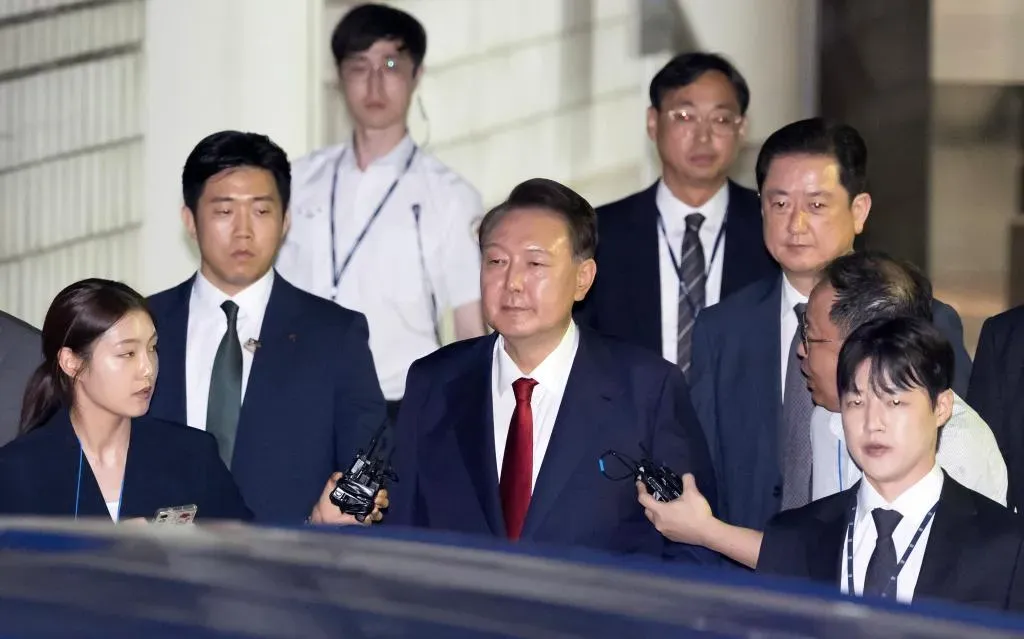
The main charges he faces include rebellion, abuse of power, obstruction of fair elections, and corruption. If the court ultimately finds him guilty of rebellion in the “martial law” incident, he could face life imprisonment or even the death penalty under South Korean law.
Additionally, if the special prosecution team finds conclusive evidence in its investigations into the Kim Geon-hee case and related matters, Yoon Suk-yeol could face additional charges, including embezzlement, bribery, and violations of election laws, which could significantly extend his sentence.
Yoon Suk-yeol has already been indicted and the trial has begun, and a lengthy judicial process is inevitable. It is reported that he has been formally transferred to court to face charges of rebellion and other offenses. Given the evidence, including the video of him publicly declaring martial law, records of military movements, and the unanimous resolution of opposition from the National Assembly, the court is likely to rule that his actions were unconstitutional and illegal, with a high probability of conviction.
Whether he chooses to accept it “gracefully” or not, history has already recorded his disgraceful defiance of the law. South Korea's judicial and democratic systems will once again prove in this incident: no matter how powerful one may be, those who cross the legal line will inevitably pay the price.