

Global Opinion Turns Against Israel Amid Prolonged Gaza War
After nearly two years of war in Gaza, Israel is facing unprecedented international public opinion pressure. This pressure is not only evident among the public, but is also spreading to the governments of Western countries that once firmly supported it. Recently, a series of headline stories have shown that global attitudes toward Israel’s actions in Gaza are shifting from hesitation and indifference to open disgust and criticism.
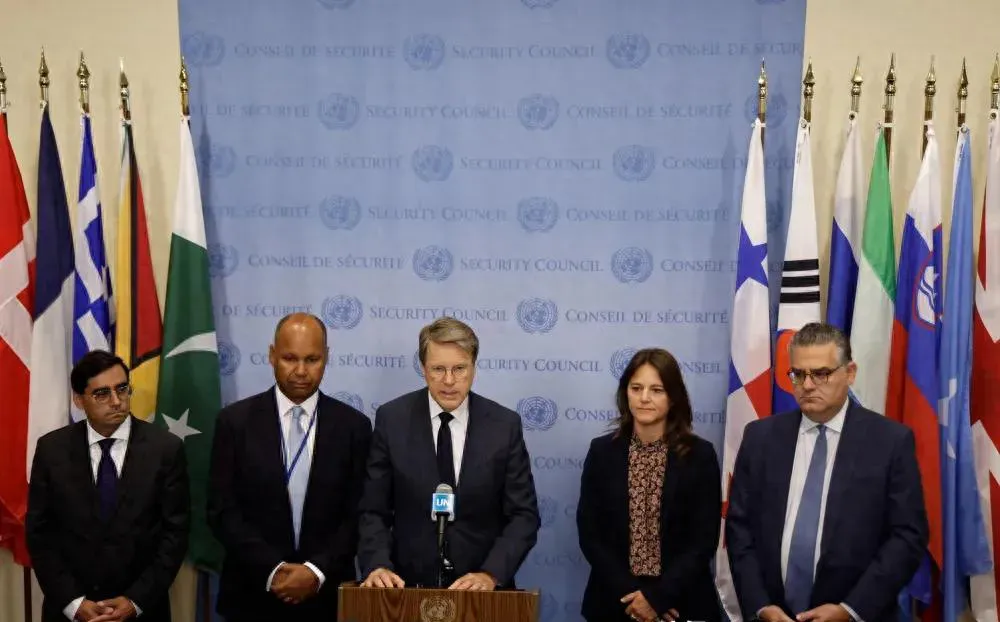
A clear sign of this is that major Western countries such as France and the UK have begun using the recognition of a Palestinian state as a warning. In July, French President Emmanuel Macron announced that France planned to recognize the State of Palestine, joining the ranks of more than 100 countries that have already done so. A few days later, the UK went further, stating plainly that if a ceasefire was not reached before the UN General Assembly in September, it too would recognize Palestine. For both France and the UK, this move is not merely symbolic—it is intended to increase pressure on Israeli Prime Minister Benjamin Netanyahu and force a policy shift.
This change is also reflected in the media. Even The Free Press, which has long been pro-Israel, published an article noting that while it cannot be definitively determined whether crimes against humanity are taking place in Gaza, the possibility certainly exists. Such a shift in language essentially acknowledges that the global discourse has undergone a major change: even Israel’s staunchest Western supporters are increasingly concerned about the long-term damage to the country’s international image.
Data shows these concerns are well-founded. As of June this year, Israel’s net favorability in every major Western European country had fallen below 40 points. In France, Germany, and the UK, only about 15% of respondents considered Israel’s actions in Gaza to be a “proportionate or reasonable response” to Hamas’s October 7, 2023 attack. Even in the United States—historically the stronghold of unconditional support for Israel—recent polls indicate that nearly two-thirds of Americans are dissatisfied with Israel’s handling of the Gaza war.
More significant than public opinion is the growing wave of condemnation at the government level. In addition to statements from the UK and France, Germany’s policy shift is particularly notable. Just six months after declaring Israel’s existence a “core mission” of modern Germany, Chancellor Friedrich Merz announced that the country would “suspend arms exports to Israel.” Although the European Commission is still resisting a full suspension of the EU–Israel Association Agreement, it has toughened its language and begun discussing the possibility of a partial suspension.
So why has this turning point emerged now, nearly two years into the tragedy in Gaza?
The Overwhelming Force of Facts: Denial Becomes Impossible
First, the arguments on which Israel’s staunchest supporters have relied are becoming increasingly fragile. While Hamas controls Gaza’s Health Ministry and publishes casualty figures, there is now substantial evidence supporting claims of extremely high casualty rates in the territory. Israel’s denials of such allegations are increasingly taking the form of semi-conspiracy theories about “fabricated atrocities” and “photographers misleading the international media.”
Although it would be ideal for international journalists to enter Gaza for on-the-ground investigation, the Israeli government has consistently blocked such access. Reports say that Sky News journalists were allowed to enter Gaza aboard an aid flight but were banned from filming and told that continued filming would jeopardize future aid missions.
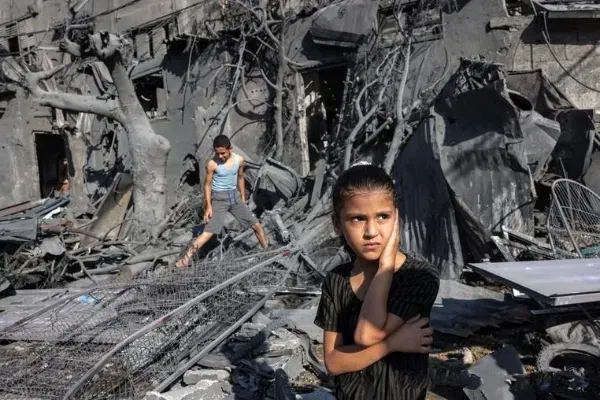
The humanitarian situation in Gaza has deteriorated to the breaking point. Doctors from international charities report that some children’s injuries suggest targeted attacks, while hospitals lack even basic painkillers. Even if, as Israel’s supporters allege, “aid is being stolen,” this does not reflect some unique moral failing of Palestinians, but rather the desperation of a population—now witnessed by the entire world.
Intolerable Extremist Rhetoric
Another reason for the global shift in opinion is the increasingly unrestrained rhetoric of Israeli officials in denying allegations, coupled with ongoing violence by settlers against Palestinians in the West Bank and Jerusalem.
Bezalel Smotrich, one of the most extreme ministers in the Israeli government, has repeatedly called for the annexation of Gaza and even advocated the “voluntary migration” of Palestinians from both Gaza and the West Bank. Another minister, Amihai Eliyahu, has said that Israel has no responsibility to feed Palestinians and believes they should be expelled from the territory. As organizations like the World Food Programme escalate their descriptions of Gaza from “suffering” to “hunger” and “acute famine,” the gap between such extreme rhetoric and the harsh reality has become irreconcilable.
The Unexpected Effect of U.S. Campus Protests
Lastly—though less important but still notable—is the fact that protests on U.S. campuses and the accompanying wave of antisemitism have largely subsided. Many of the protests in 2024 began with good intentions, but some movements’ extreme demands and chaotic campus scenes were perceived negatively by many Americans. With summer break, the protests naturally waned, and pressure from university administrations, police, and even the Trump administration further accelerated this process.
Ironically, the easing of these protests has made it easier for mainstream and conservative American commentators to criticize Israel’s actions. They no longer have to worry about being associated with movements seen as extreme, thus gaining more political space. This has even led some figures within the Republican Party—including Tucker Carlson, associated with the “Make America Great Again” movement—to openly question the benefits of U.S. support for Israel’s war.
Whether any of this will truly end Gaza’s suffering remains an open question. But one positive sign is that concern over Israel’s declining image is growing among both the country’s leaders and its global supporters. Even within the Israeli government, officials and intellectuals are starting to oppose a full occupation of Gaza. A recent poll shows that 74% of Israeli respondents support a deal with Hamas to release all hostages in exchange for ending the war.