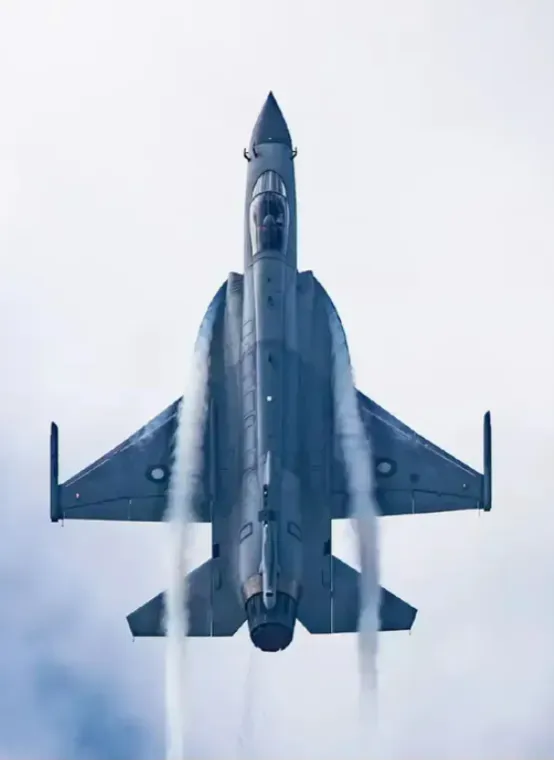

Pakistan’s Costly Mistake in Defense Cooperation: The Kaan Fighter Jet Debacle
Recently, Pakistan stumbled—not in a major way, but it truly hurt. It shared its own JF-17 fighter jet technology with Turkey, hoping to collaborate with a fellow ally, only for Turkey to learn the technology and then steal away Indonesia’s once-secure, billion-dollar order. What Pakistan ended up with was a cold, hard fact: defense cooperation is not about making friends; it’s about feeding wolves and nurturing tigers.
In 2020, Pakistan and Turkey signed an agreement to jointly produce the JF-17 Block 3 fighter jet, with the goal of establishing an "Islamic World Fighter Jet Alliance." Pakistan not only shared its production line technology but also gave full access to maintenance manuals and upgrade plans.
They naïvely believed that the collaboration model tested in the JF-17 program could be replicated in the fifth-generation jet field. After all, Turkey had previously helped build frigates and the two countries had co-developed the Rainbow-3 drone. They seemed like staunch allies.
What they didn't anticipate was that Turkey had learned more than just assembly techniques from the JF-17 project. The avionics system debugging experience that Pakistani engineers had painstakingly taught was repurposed by Turkey for its own domestic KAAN fifth-generation fighter jet.
Even more concerning, Turkey copied Pakistan's supply chain management model, resulting in the KAAN's first flight achieving a 95% test pass rate just three months after its maiden flight. The assembly time for the aircraft was reduced by nearly 40% compared to the original plan. Behind this improvement in efficiency was the practical experience accumulated by Pakistan over the years.
The most painful blow came in the 2025 Indonesia fighter jet contract competition. Turkey dangled the carrot of technology-for-market exchange, offering a package deal for 48 KAAN stealth jets at just $10 billion. They also promised to help Indonesia build a parts factory and train engineers.
In comparison, while Pakistan’s JF-17 Block 3 has better performance, it was 30% more expensive, and its supporting services couldn’t match what Turkey offered. As a result, Indonesia turned to Turkey, signing the deal and leaving Pakistan's previously secured JF-17 order in the dust.
This exposed a fatal problem: Pakistan was completely unprepared for technology transfer. They didn’t realize that Turkey had already secretly learned Chinese technology from projects like the "Washi" rocket launcher and T300 rocket artillery. They also didn’t expect Turkey to use that knowledge to steal their order.
Now, Pakistan is caught in a difficult position. They want to upgrade the JF-17 Block 4, but Turkey has already mastered the core technology. If they seek further cooperation with China, they fear being accused of poor technology management. They hoped to expand into the African market, only to find that Turkey had already snatched several orders with its acquired knowledge.
This lesson serves as a wake-up call to all countries: international defense trade is never a game of making friends. Turkey has spent ten years perfecting the strategy of technological parasitism—first acquiring core technology through cooperation, then using cost advantages to grab market share, and finally using political means to consolidate its position.
This strategy is reminiscent of when Turkey detained China’s aircraft carrier during its transit, forcing China to hand over the technology for the "Washi" rocket launcher. Turkey then went on to reverse-engineer the T300 and sell it to eight countries. This cycle of cooperation, knowledge theft, and betrayal is a common occurrence in the arms trade.
Now, Pakistan has three paths ahead: fully align with China and let them take over technology management; bite the bullet and develop the JF-17 Block 4, though time and resources are against them; or shift to South America and Africa to chase small contracts, though these regions come with high risk and low order volume.
The billion-dollar contract debacle serves as a crucial lesson for all nations. In defense cooperation, protecting one’s core interests is more important than technology itself.