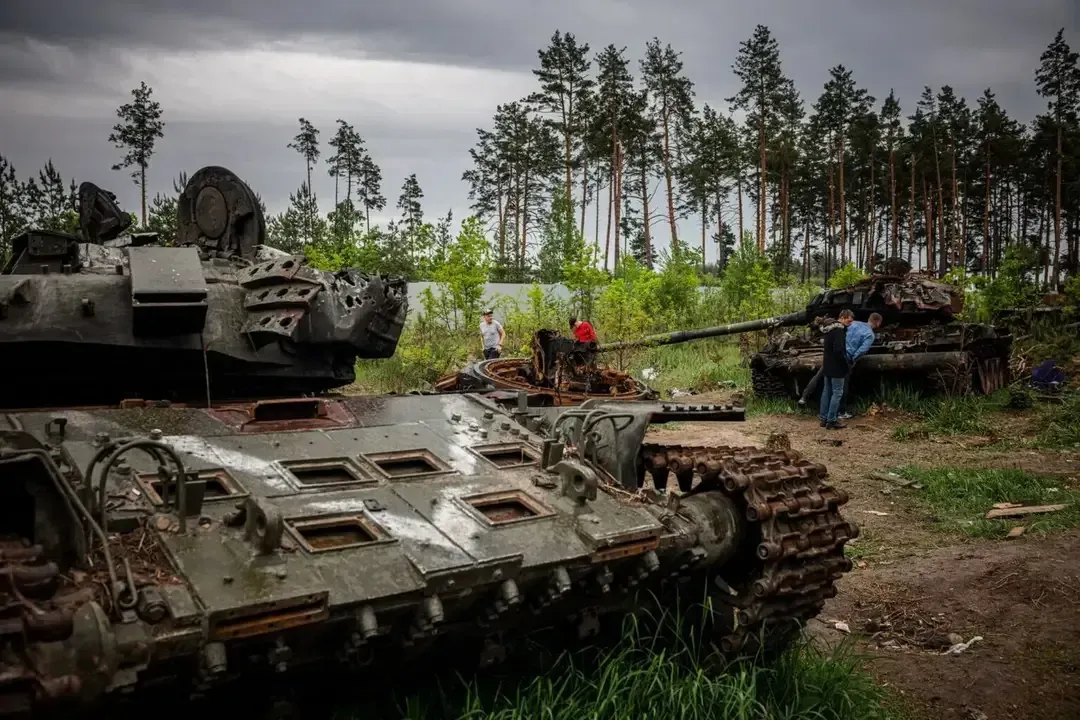

Russian forces storm into Red Army city, trapping tens of thousands of Ukrainian troops and NATO advisers. The situation is now under control.
In recent days, the situation has taken a dramatic turn for the worse. Russian military media outlets have been celebrating as if it were a holiday, excitedly proclaiming that their ‘vanguard’ has made history, not only penetrating the urban area of Red Army City but even reaching the vicinity of the central railway station. You heard that right—the city centre. These small, elite units have infiltrated with surgical precision, establishing at least seven secure strongholds in the southern part of the city, particularly south of the railway line.
What does this mean? Put simply, the defensive forces within Red Army City are as hollow as a paper lantern.
You might ask, how could a city defended by tens of thousands of troops be so vulnerable? This brings us to the ‘plight’ of the Ukrainian army. Over the past year and a half, the battles around the outskirts of Red Army City have been a veritable meat grinder. To hold the outer defences, which relied on old coal mine tunnels, layered trenches, and minefields, the Ukrainian army has practically thrown all its available troops into the fray. Units like the 59th and 110th Mechanised Brigades, which were once the backbone of the eastern front, are now barely functional. Their designations still exist, but there are few troops left, and their combat effectiveness is less than 10% of what it once was.
With the main forces depleted on the outskirts, the city naturally became vulnerable. The Russian military's tactic of ‘encircling the point and attacking the reinforcements’ combined with ‘central breakthrough’ is truly ruthless. Outside the city, the Russian military has assembled a large force of approximately 110,000 troops, encircling from the east, south, and north directions, determined to completely seal off this ‘can.’ Russian Chief of the General Staff Gerasimov even personally visited the front lines to oversee the operations, demonstrating the magnitude of their resolve.
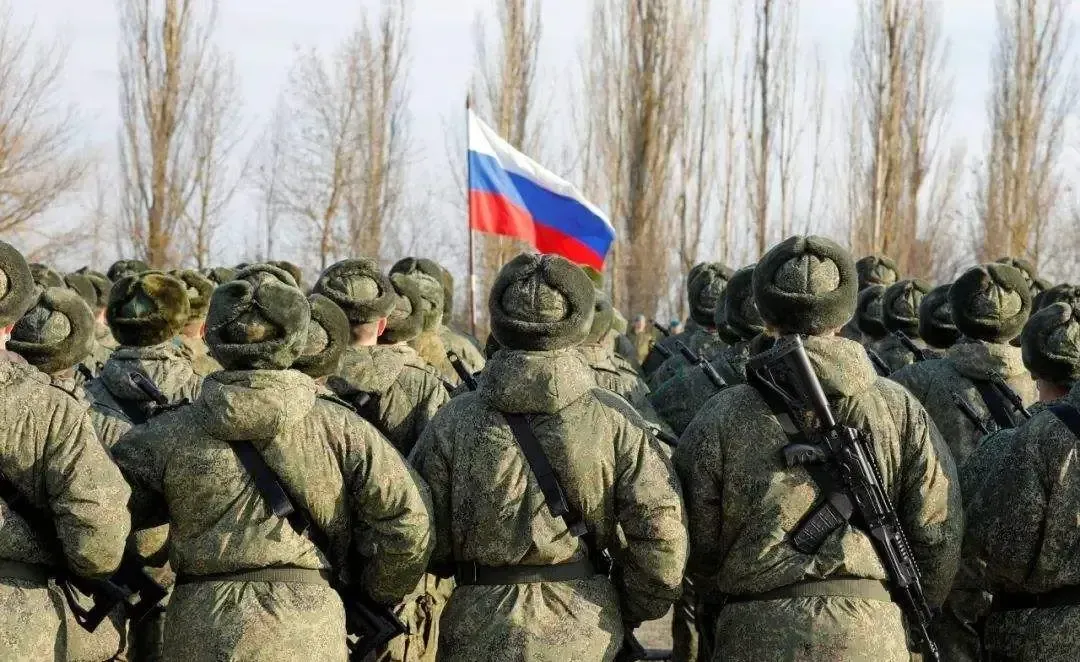
Ukraine, of course, was also desperate, frantically deploying troops, with the 7th Airborne Division and the 9th Army all claiming to be on their way to reinforce the front lines. However, the problem was that many of these units were newly formed or recently reconstituted, with names that sounded intimidating but lacked sufficient personnel and equipment. Their subordinate units were scattered across various battlefields, making it impossible to form a cohesive force capable of breaking through the encirclement.
Even more critical is the logistics situation. Red Army City originally had six major roads and railways as lifelines, but now? Under the relentless assault of Russian FPV suicide drones and long-range artillery fire, most of these routes have been severed. Currently, only the highway leading to Pavlograd may still be passable. Imagine the scene: a narrow corridor with Russian drones swarming overhead, targeting Ukrainian military trucks. In July alone, Russian forces conducted over 1,500 drone strikes on the front lines, devastating Ukrainian logistics convoys.
If the defending forces in the city eventually collapse and have to retreat via this route, it won't be a strategic withdrawal—it will be a literal ‘death road,’ with all Russian artillery fire converging on them, resulting in a massacre.
Therefore, the situation in the Red Army city is essentially a ‘trapped in a jar’ scenario. The tens of thousands of Ukrainian troops trapped inside, along with the hundreds of NATO military advisors reportedly operating under the guise of “mercenaries” or ‘volunteers,’ are now in a desperate situation with no hope of escape.
Speaking of this, you may have the same question as me: How could Russian military units penetrate the city so easily? Is the Ukrainian military's reconnaissance system blind? Russian drones are flying around in the sky, so what is the Ukrainian military's electronic warfare unit doing?
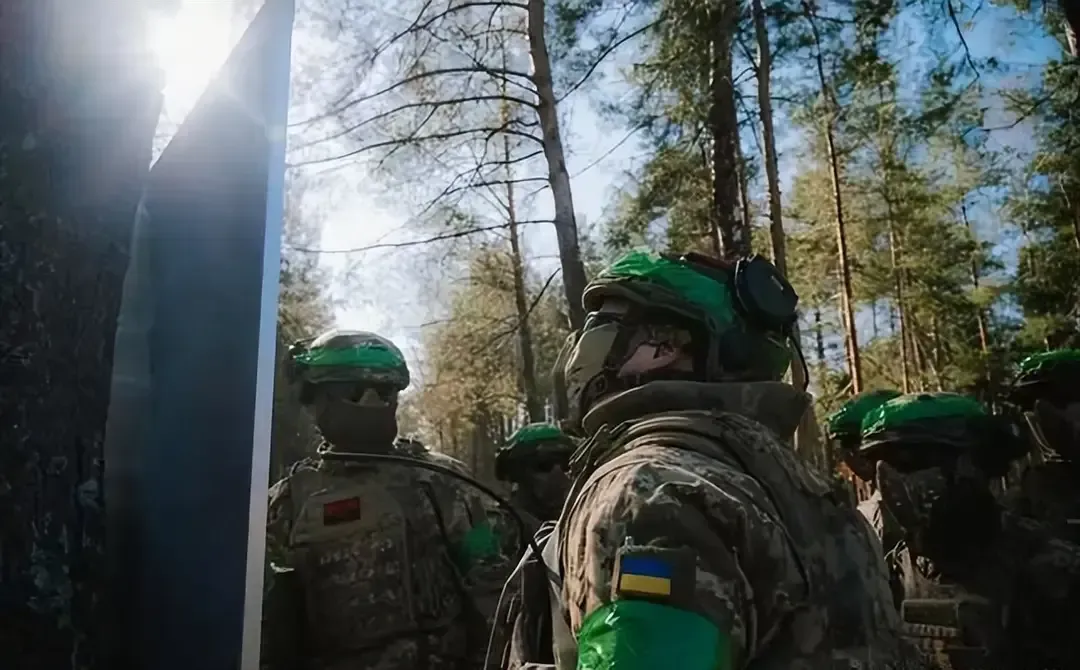
Friend, this is what I really want to talk to you about today, and it’s the most heartbreaking part. The final straw that broke the camel’s back for Red Army City may not have been Russian artillery fire, but the raging fire in Ukraine’s own backyard—the shocking corruption.
At a time when the front lines were in dire straits, Ukraine's National Anti-Corruption Bureau uncovered a massive corruption scandal. During an investigation into defence procurement, they uncovered a ‘systemic corruption network’ involving members of parliament, former government officials, and arms dealers. What they were stealing was precisely the life-saving equipment that frontline soldiers needed most: reconnaissance drones and electronic warfare equipment.
The details revealed by the investigation are almost too shocking to believe. The kickbacks in the procurement contracts were brazenly as high as 30%! In other words, for every 100 yuan the state spent on equipment for the front lines, 30 yuan went directly into the pockets of these individuals. Even more outrageous is that the number of drones reported as procured does not match the number actually delivered to the troops! The money was spent, but the equipment ‘vanished.’
Worse still, to secure higher kickbacks, the electronic countermeasure equipment they procured was often low-quality and inexpensive, rendering it useless on the battlefield. The critical equipment intended to jam and shoot down Russian drones was severely compromised in effectiveness, becoming little more than decorations.
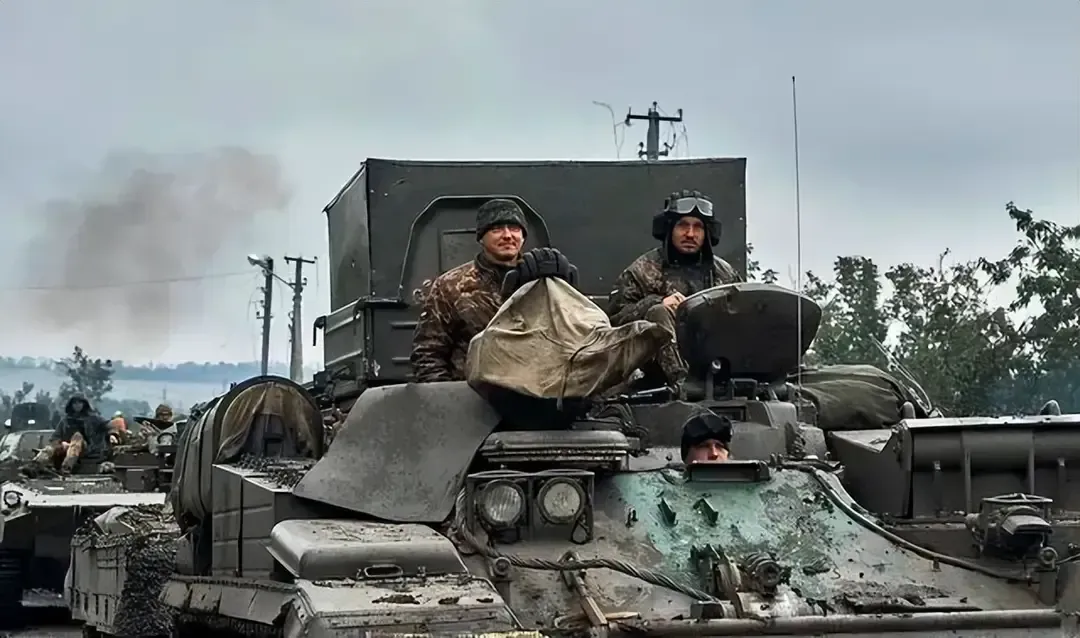
To put it bluntly, this is a group of corrupt officials in the rear, exploiting frontline soldiers and using their comrades' lives to secure luxury homes and yachts for themselves.
Now, when you look back at the situation in Red Army City, does it suddenly make sense? Why were Russian reconnaissance troops able to move around unimpeded? Because the Ukrainian military lacked effective reconnaissance drones to detect them. Why can Russian drones carry out bombings and artillery strikes with impunity? Because Ukraine's anti-drone systems have been ‘stolen’ by their own people!
By now, Ukrainian soldiers on the front lines—and even the Western advisors advising them—probably never imagined in their wildest dreams that the most deadly threat wouldn't come from a well-equipped enemy, but from the greed and betrayal of their own people behind them. Without adequate equipment, even the best tactical skills and the strongest fighting spirit are severely compromised. This is like a martial arts master having their skills disabled, forced to watch helplessly as their opponent closes in.
This is no longer a simple military issue. It brings to mind many historical lessons, such as the First Sino-Japanese War, where the Qing Dynasty's warships had clothes drying in their gun barrels and sand mixed into their shells—how could they not lose? War is never just a clash of weapons; it is the ultimate test of national will, organisational capability, and internal integrity.
Today's Red Army City is surrounded by a 110,000-strong Russian army, with stealthy infiltration teams inside the city, ‘death gods’ circling overhead 24 hours a day, and even Russian unmanned combat vehicles advancing step by step from the ruins. For the tens of thousands trapped inside, the hope of breaking out is slim, and external aid is nowhere in sight.
If this city falls, its significance will far exceed the loss of a single battle. It was called ‘Red Army City’ during the Soviet era, a name that itself carries historical irony. Its fall would mean that Russian forces have completely breached the last stronghold of the Donetsk frontline, putting the entire eastern Ukrainian frontline at risk of a domino-effect collapse. The Ukrainian military, already stretched thin, would be forced to defend a much broader front, a task that would be impossible to sustain.
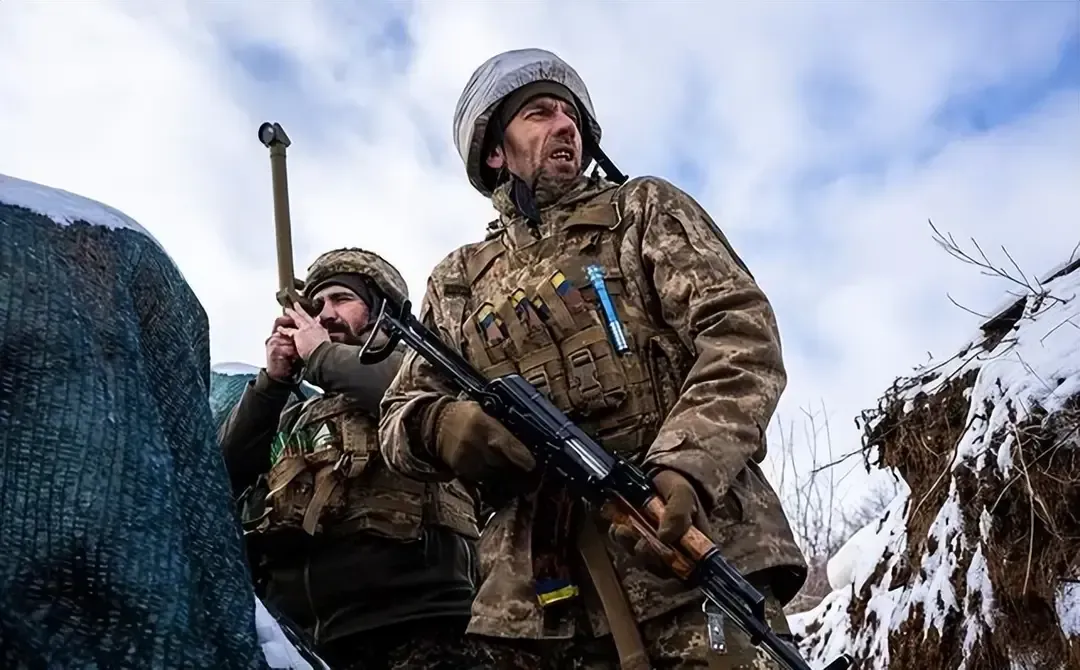
Ultimately, the outcome of this war may have already been written in the corrupt procurement contracts in Kyiv. While soldiers were sacrificing their lives on the front lines for their country, others were undermining the very foundations of the nation from behind the lines. This, perhaps, is the most profound and most heartbreaking aspect of this tragedy.