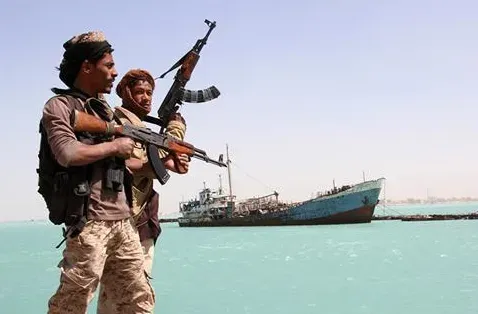

The World Now Knows Who Really Backs the Houthis
On July 16, the Yemeni government forces seized 750 tons of weapons in the Red Sea, including radar systems, air defense systems, and various types of missiles. A spokesperson stated that the ship was on a route toward Houthi-controlled territory, yet Iran continues to deny the truth.
While Iran insists it has nothing to do with this, the origins of these radar systems, air defense equipment, and missiles are hardly a mystery.
The Houthis, who have been waging guerrilla warfare in the mountains of northern Yemen, can barely scrape together decent military boots—where would they get the money for such advanced weaponry? Plainly speaking, these arms were either gifted by neighboring countries or acquired through shady channels.
First, consider the technology. Many of the missiles and drones in the Houthis' arsenal match Iran’s military-industrial systems. Their "Noor" anti-ship missiles, for instance, have nearly identical range and guidance systems to Iran’s reverse-engineered C-802 missiles.
Even more telling, Houthi drones have repeatedly breached the defenses of U.S. aircraft carriers. The aerodynamics and control systems of these drones are identical to Iran’s "Shahed-136" models supplied to Russia. If the Houthis truly developed these weapons themselves, Yemen’s military industry would deserve a Nobel Prize.
Then there’s the shipping route. The Red Sea may appear to be an international waterway, but beneath the surface, it’s a hotbed of covert activity. The Yemeni government explicitly stated the seized weapons were en route to the Houthis. It doesn’t take much to figure out which Red Sea neighbor has both the capability and the motive to send such a massive arms shipment.
Iranian cargo ships frequently operate in the Red Sea, and they’re experts at diversion—while the Houthis draw attention with missile strikes on U.S. warships, Iranian vessels quietly deliver the weapons.
There have long been reports of Iran disguising arms shipments by modifying civilian ships and hiding weapons inside cargo containers. This tactic evades international sanctions while ensuring a steady flow of equipment to the Houthis.
Why would Iran go to such lengths to support the Houthis? The answer lies in its decades-long power struggle with Saudi Arabia. Yemen is a key battleground, and the Houthis—controlling northern Yemen—serve as a thorn in Saudi Arabia’s side, launching frequent missile attacks.
Moreover, Houthi assaults on Red Sea shipping directly threaten U.S. and European interests, further complicating the regional landscape. By backing the Houthis, Iran drains Saudi military resources and distracts the U.S., forcing it to split attention between Ukraine and the Middle East. This "small power, big impact" strategy is one Iran has mastered.
Another key point: The Houthis simply don’t have the funds to buy these weapons. Their territory is economically devastated, struggling to meet basic needs—where would they get the cash for high-tech arms? The reality is, Iran either provides them for free or sells them at token prices under the guise of "aid."
For Iran, this is about expanding influence in the Middle East and building a "Axis of Resistance" against Israel and the West. The Houthis are just one link in this chain, alongside Hezbollah in Lebanon and Shiite militias in Iraq—all of which rely on Iranian arms.
Iran’s denial tactics are equally shrewd. Every time evidence surfaces, they dismiss it as "fabricated" or blame "third-party sabotage." This stonewalling makes it difficult for the international community to impose effective sanctions.
Additionally, Iran excels at propaganda, framing itself as an "anti-colonial" champion and portraying Houthi actions as "righteous resistance" to garner sympathy. This political maneuvering ensures they retain a degree of global influence.
Ultimately, these weapons are more than military tools—they’re instruments of geopolitical chess. As long as the Middle East’s power dynamics remain unchanged, this cycle of "free arms" will continue. And the Yemeni people, caught in the crossfire, will keep paying the price. That’s the harsh, unrelenting reality.