
The Fates of Mixed-Race Children Born from American Soldiers and Vietnamese Women During the Vietnam War
During the Vietnam War, many U.S. soldiers on the battlefield did not have their wives with them, so they sought companionship with local Vietnamese women. Twenty years later, when the American soldiers returned to the United States, they had little intention of bringing these Vietnamese women and their mixed-race children back home. What happened to these children later?
Please click "Follow" in the top right corner to facilitate discussion and sharing, and to give you a different sense of participation. Thank you for your support!
Today, on the streets of Vietnam, you can still occasionally see middle-aged individuals with foreign features. Their eye sockets are deep-set, their skin tones vary from light to dark, their hair is curly, and their noses are high, making them stand out in the crowd. However, locals rarely approach them, and visitors find it hard to imagine that these individuals are the lingering scars of a war that ended over half a century ago. They are not tourists but “strangers” born on Vietnamese soil—the mixed-race children of Americans and Vietnamese.
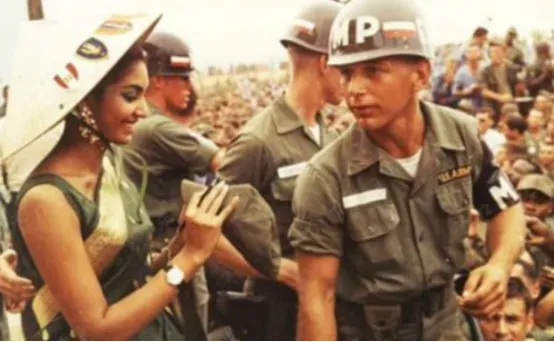
During the 1960s and 1970s, the Vietnam War was a nearly two-decade-long military conflict. At its peak, over 500,000 U.S. troops were stationed in Vietnam. The prolonged and brutal war caused many young American soldiers to seek solace amid the stress of foreign land and spiritual loneliness. They formed relationships with Vietnamese women—some brief, others lasting for years or even cohabiting. However, most of these relationships were not legally recognized and lacked social security. Some Vietnamese women, driven by survival, others by hopes for a better future, believed that these relationships could help them escape the chaos of war or even move to the United States.
In 1975, the U.S. hurriedly withdrew its troops. Many soldiers left without any notice or arrangements for their Vietnamese partners and children. U.S. policies remained evasive, and the American embassy in Vietnam rarely processed formal procedures for these informal families. The withdrawal was not only a military failure but also left behind countless broken families and abandoned lives, morally and emotionally.
These mixed-race children bore a special mark from birth. Their appearance was easily recognizable in Vietnam, making them openly “the Other.” The “American blood” they carried was not seen as an advantage in post-war Vietnamese society but as a target of hostility. During a time of heightened anti-American sentiment, they were called “offspring of American imperialists,” facing exclusion and humiliation in schools, communities, and even families. Those with African features stood out even more, suffering heavier discrimination.
The mothers faced hardships too. They had to raise their children alone while dealing with village gossip and societal prejudice. Many lost their previous livelihoods, forced into menial labor, and some, overwhelmed by poverty and pressure, sent their children to orphanages or fled to distant places, trying to hide their past. Some children grew up in orphanages; others ended up on the streets, scraping by at the lowest social levels.
For over a decade after the war, these mixed-race children from the U.S.-Vietnam union were largely forgotten. They lacked identity documents, support, and prospects. It wasn’t until the mid-1980s, with increased reflection on the Vietnam War in the U.S. and intervention by international humanitarian organizations, that their plight drew attention. Media reports and documentaries highlighted their existence and struggles. Under international pressure, the U.S. government passed relevant legislation in 1987 allowing these children with American lineage to apply for immigration to the U.S.
Many of these children lacked birth certificates or paternal information, making their application process difficult. Even if approved, their reality in America was far from the “American Dream”: language barriers, cultural differences, low educational levels made integration challenging. Most could not contact their biological fathers—many of the soldiers had already remarried in the U.S., unwilling to acknowledge or confront the past. Even when they found their fathers, they often received cold apologies like “Sorry,” without true belonging or familial bonds.
Children who remained in Vietnam faced even heavier burdens. In the 1980s and 1990s, Vietnam’s economy was still recovering, and societal attitudes remained conservative. They faced discrimination in employment, lacked educational resources, and encountered many obstacles. Some chose to live quietly and endure; others fought to break through difficulties by learning foreign languages, participating in tourism or foreign trade, or sharing their stories through media to seek understanding or find their fathers.
By the 21st century, Vietnam’s society gradually opened up. Some mixed-race individuals saw their circumstances improve, but this was not universal. Many still struggled on the margins, unable to choose their father’s nationality or access a complete family background. They felt like outsiders in Vietnam and also in America. The ambiguity of their identity and lack of belonging became lifelong psychological burdens.
Today, many of these mixed-race individuals are in their fifties or older. Some have managed to establish themselves in society through their own efforts, but most still live on the fringes. Their children inherit their resilience, yet some continue to face the same “American blood” prejudice. The wounds of history have not fully healed; they are merely buried deeper in silence over time.