

A satellite that had been out of contact for 46 years suddenly sent a signal to Earth, but why are humans not happy about it?
In 1967, NASA announced, “Unfortunately, we have lost contact with our satellite!” In 2012, a British radio enthusiast responded, “No problem, I've managed to get your satellite back online!” Can you believe it? A satellite that had been out of contact for 46 years was rediscovered by an amateur radio enthusiast, and even caught the attention of the authorities.
The satellite, named “LES-1,” was an “old relic” launched during the Cold War. It became a “zombie satellite” just two years after launch, but after 46 years, it suddenly started transmitting signals again. What's going on here? Why aren't scientists thrilled to hear this news?
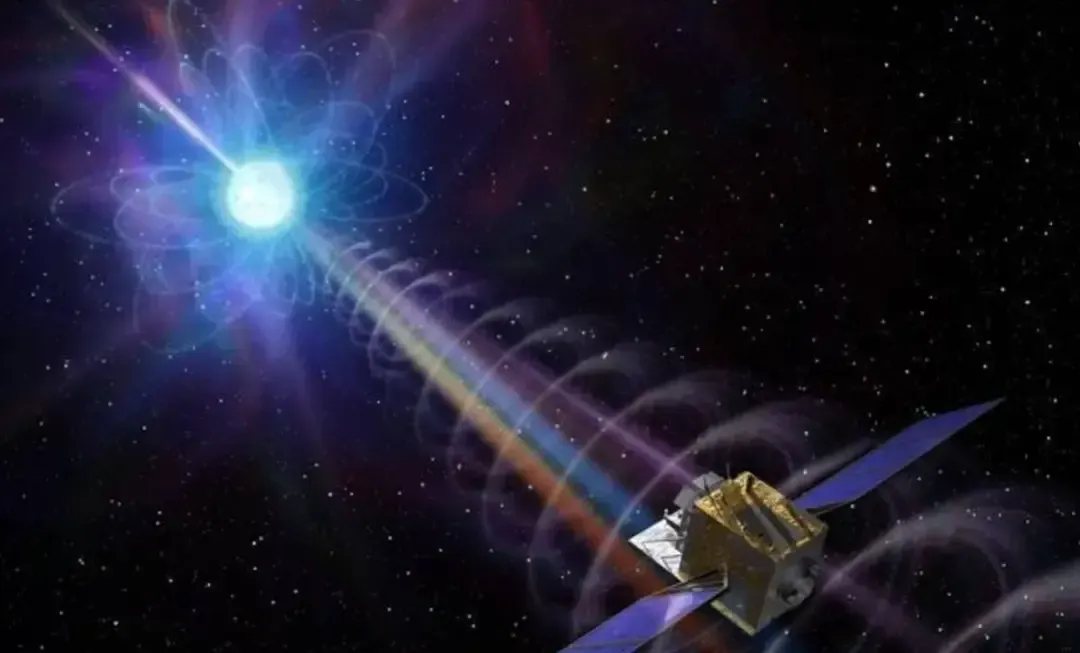
A satellite that lost contact for 46 years suddenly sends signals to Earth—why aren't humans happy about it?
The “zombie satellite” revives
On an ordinary evening in December 2012, Phil Williams, who lives in Cornwall, England, was adjusting his equipment as usual. This middle-aged man has no other hobbies besides tinkering with radios. That day, he accidentally tuned his receiver to the 237MHz channel and suddenly heard an odd signal.
The signal was intermittent, weakening and then recovering every four seconds, repeating in a cycle as regular as breathing. At first, he thought there was a problem with his equipment, but after repeated adjustments, the signal persisted. He couldn’t sit still anymore—this regularity couldn’t possibly be a natural phenomenon; it must come from something artificial! Could it be aliens?
A satellite that had been out of contact for 46 years suddenly sent a signal to Earth. Why weren't humans happy about it?
To determine the source of the signal, Phil reviewed a lot of materials and initiated a discussion among radio enthusiasts. After much research, they discovered that the signal's characteristics matched those of the “LES-1” satellite launched by the Massachusetts Institute of Technology (MIT) in 1965.
The satellite's full name is “Lincoln Experimental Satellite 1,” born during the height of the U.S.-Soviet space race in the 1960s. At the time, the U.S. military launched a secret satellite program codenamed “Lincoln” to develop a secure military communication system. The LES-1 satellite launched in 1965 was the pioneer of this program.
Why aren't humans thrilled that a satellite lost contact for 46 years suddenly sent a signal to Earth?
Unfortunately, this pioneer faced a series of misfortunes. Due to a wiring error causing engine ignition failure, the satellite entered the wrong orbit shortly after launch. After struggling for two years, LES-1 lost contact completely in 1967, becoming an “electronic zombie” drifting in space.
By all accounts, such a “scrapped” satellite should have remained silent forever. Yet, 46 years later, it was miraculously “revived” by Phil, a radio enthusiast. The news shocked even NASA. After comparing the data, scientists confirmed that it was indeed the LES-1 that had lost contact years ago!
But a question arose: given that the satellite's power supply should have been depleted long ago, what was it relying on to continue transmitting signals?
Why aren't humans thrilled that a satellite lost contact for 46 years suddenly sent signals back to Earth?
Why did the satellite “revive”?
Scientists have offered various speculations about why the satellite “revived.”
Let's focus on the most likely explanation. The LES-1 was designed to rely on solar panels and batteries for power. Shortly after its launch, it entered an incorrect orbit. After operating for about two years, it drifted into a “shadow zone” where sunlight couldn't reach it, causing the entire system to enter hibernation.
The satellite was equipped with over 2,000 solar cells. Although the batteries may have severely aged in the long-term deep space environment, some solar panels may have generated weak electricity when they were re-exposed to sunlight after the satellite's orbital changes, providing a small amount of energy to the remaining batteries.
Why aren't humans thrilled that a satellite that had been out of contact for 46 years suddenly sent a signal to Earth?
Another key factor is its unique orbital trajectory. Before losing contact, LES-1 was positioned within the “Van Allen radiation belts,” a high-energy particle radiation zone formed by charged particles captured by Earth's magnetic field. Scientists speculate that as various cosmic particles continuously bombarded the LES-1 satellite, its signal transmission circuits may have been accidentally reactivated.
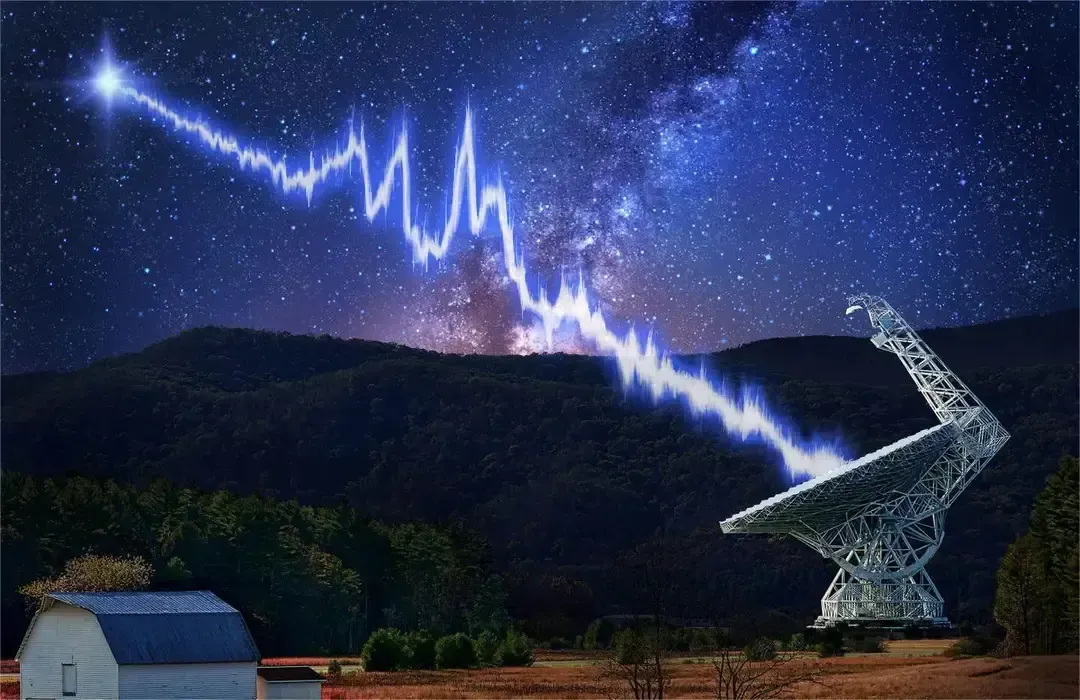
As an early satellite launched in 1965, LES-1 used hardwired circuits rather than programmable systems, reducing the risk of data module damage caused by radiation. As for the 4-second signal fluctuations, these are actually caused by the satellite tumbling in space, with its solar panels periodically facing the sun every 4 seconds, resulting in regular variations in signal strength.
“One thing is certain: it has survived over 46 years in the harsh, radiation-filled space environment without a scratch,” scientists marveled.
Why aren't humans thrilled that a satellite lost contact for 46 years suddenly sent a signal to Earth?
Space debris crisis
In fact, satellites like LES-1 are not isolated cases. As of April 2021, there were 7,389 satellites in low Earth orbit, and this number is growing at a rate of approximately 990 per year. Experts predict that by 2028, the number of satellites orbiting Earth could exceed 15,000.
While these satellites include new cube satellites and nanosatellites, what is concerning is that approximately 60% of the satellites in orbit have already reached the end of their operational lifespans and have become unmanaged space debris. These floating objects not only face an uncertain fate but have also become major safety hazards for space stations and spacecraft.
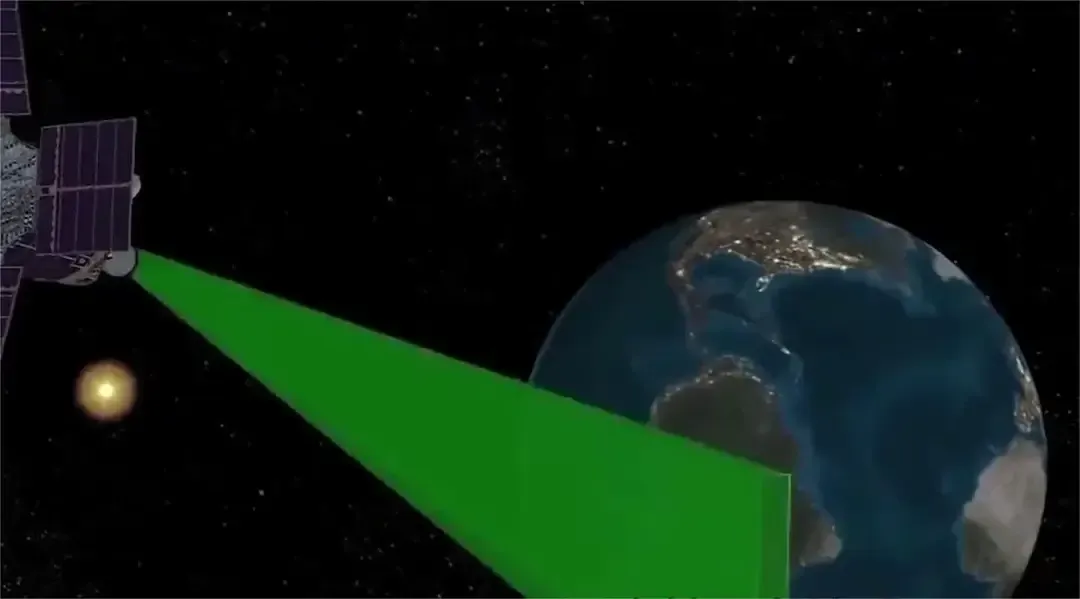
A satellite that had been out of contact for 46 years suddenly sent a signal to Earth—why aren't humans thrilled?
Worse still, these “zombie satellites” can collide with one another. Having lost their propulsion systems, they drift aimlessly, colliding with other “zombie satellites” and breaking apart into even smaller pieces of space debris. In 2017, according to statistics from Australian authorities, over 170 million pieces of space debris were orbiting Earth, with only 22,000 under surveillance and tracking.
In 2009, the U.S. “Iridium 33” satellite collided head-on with Russia's defunct “Cosmos 2251” satellite in orbit, a classic example of the dangers of space debris. NASA statistics show that such collisions result in the destruction of 3-4 U.S. satellites annually.
A satellite that has been out of contact for 46 years suddenly sends a signal to Earth—why aren't humans thrilled?
The most challenging issue is that this debris is difficult to naturally decompose. Especially beyond an altitude of 1,000 kilometers above the ground, debris may linger for hundreds or even thousands of years. Additionally, as more new satellites are launched, orbital space becomes increasingly crowded. “Within 5 to 10 years, we may lose everything,” said NASA expert Green.
Although the LES-1 satellite is currently safe in its orbit, no one can guarantee it won’t suddenly “accidentally lose control” and collide with a functioning satellite. Now you understand why scientists are deeply concerned about this “revived” satellite.
These early space relics hang like the Sword of Damocles over humanity’s head, casting a shadow over our space exploration dreams.
Why can't humanity rejoice over a satellite that has been out of contact for 46 years suddenly sending signals back to Earth?
Conclusion
The “resurrection” of LES-1 may seem like a technological miracle, but it actually serves as a wake-up call about the deteriorating state of the space environment. This is not merely a scientific issue but a strategic one concerning the future of human space exploration. After all, on the path of space exploration, humanity must not only pursue technological progress but also prioritize the sustainability of the space environment.
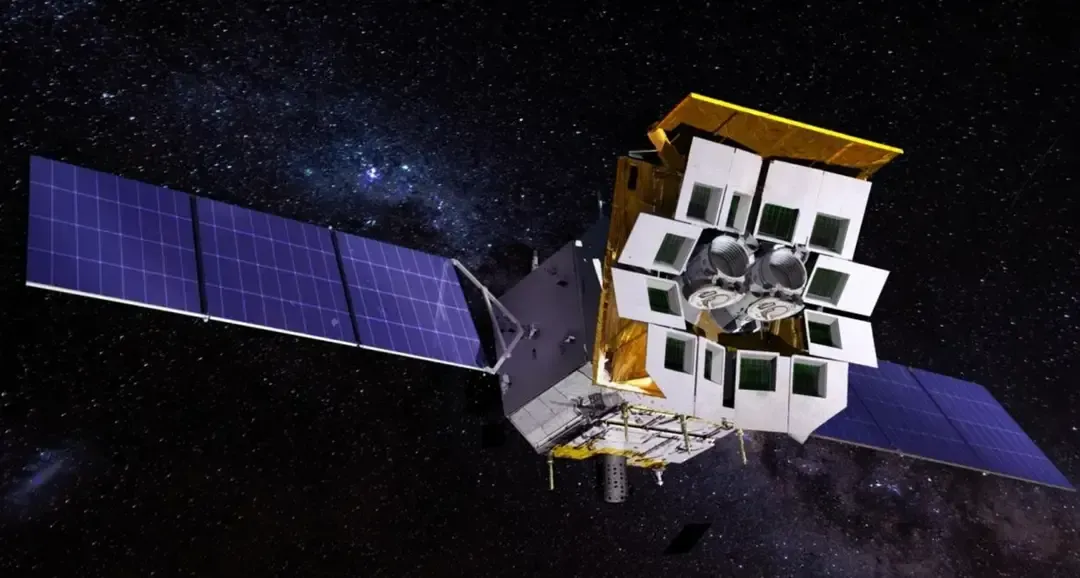
To address this global issue, international cooperation is essential to establish a comprehensive “space traffic” management system and develop reliable debris removal technologies. Otherwise, one day in the future, near-Earth orbits could be filled with space debris, making it impossible to launch new rockets, effectively trapping humanity on Earth.