
America in Chaos: A Government Shutdown and a Nation in Disarray
The U.S. government’s recent actions have truly left people stunned! The government has been shut down for half a month, yet there’s no sign of any effort to fix the problem. Meanwhile, a new port fee policy is causing total chaos — the whole country feels like a hastily assembled film crew.
Since the shutdown began on October 1st, it’s now the 14th, and the White House remains silent. Congress members keep blaming each other, while 800,000 federal employees have been sent home without pay.
Some people have even received layoff notices. What was initially called a “temporary delay in salary payments” has turned into “we’ll consider whether to keep employing you.” This doesn’t look like a functioning nation — it’s like a company on the verge of bankruptcy!
Sure, partisan fights aren’t new, but this time is beyond ridiculous. Neither the House nor the Senate could pass their respective bills. No one wants to compromise, and as a result, they can’t even agree on a temporary budget.
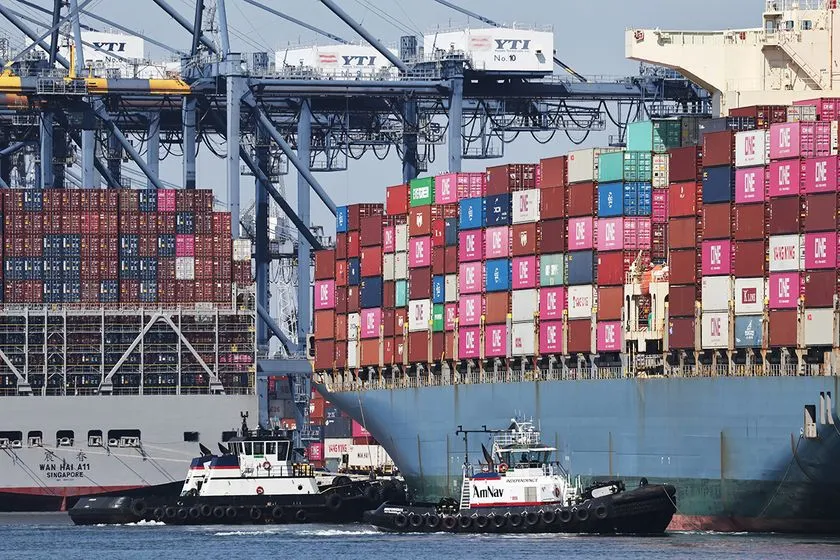
To make things worse, amid all this turmoil, they introduced a new “port entry fee” policy targeting Chinese ships — like a house on fire deciding to tear off the neighbor’s roof first.
The new rule, effective October 14th, imposes absurdly high fees. As long as it’s a Chinese vessel — whether owned by or built in China — it’s subject to the charge.
The highest rate is $50 per ton, or $120 per container. Even more outrageous, the government, short-staffed due to the shutdown, is letting shipowners decide for themselves how much to pay and how to pay — through Pay.gov, no less.
Is this a tax or a joke? With U.S. Customs and Border Protection (CBP) understaffed, they’ve basically given up, saying, “We don’t know who should pay or how much — figure it out yourselves.” It’s like a self-service buffet: take what you want, pay what you think, and maybe no one will check if you did it right.
This has left shipowners completely bewildered. Some, fearing penalties, overpaid and saw their profits vanish. Others underpaid and ended up with seized vessels and fines.
Smarter ones rerouted through Canada or Mexico, opting for land transport into the U.S. — more trouble, but at least less risky. At the Port of Los Angeles, clearance times have doubled from 2–3 days to 5–7, sometimes even longer.
Amazon shipments can’t even get in; warehouse intake has dropped 30%. The impact on e-commerce is self-evident.
But this issue isn’t just about “fees.” The entire U.S. government has fallen into dysfunction. Agencies like the FDA and FCC have shut down, halting product certifications. Economic data releases have stopped, leaving businesses without even basic market information.
How are companies supposed to make decisions under such conditions? From the outside, this may look like a “policy blunder,” but in truth, it’s the result of deep political division in America.
Now even basic government operations are barely being held together by procrastination. Imagine — a country like this still lectures others about governance and market economy. It’s laughable.
Of course, China isn’t taking this lying down. As early as October, the Ministry of Transport updated the Regulations on International Maritime Transport, explicitly stating that China can retaliate against discriminatory policies.
You charge me port entry fees? I’ll charge you extra. You restrict my ships? I won’t welcome yours either. In short: however you treat me, I’ll respond in kind. No one gets to profit unfairly.
Many shipping companies aren’t naive either. COSCO and others are already rerouting away from U.S. ports, focusing instead on Asia–Europe lines. What they fear most is America’s unpredictability — one day it’s this rule, the next day it’s another. With no stability, who would risk doing business there?
At this point, the U.S. doesn’t even qualify as a “makeshift troupe” anymore — it’s a complete mess.
Even the Speaker of the House admitted this shutdown could become the longest in history. You heard that right — they’ve given up to such an extent that they don’t even plan to resolve it anytime soon.