

Microsoft tests Windows 11 Photos build 2025.11090.25001.0, introducing AI-powered automatic categorisation
Microsoft recently (25 September) published a blog post inviting all Windows Insider programme channel users to test the new version of the Photos app on Windows 11 AI+ PCs, with a particular focus on introducing the ‘AI automatic categorisation’ feature.
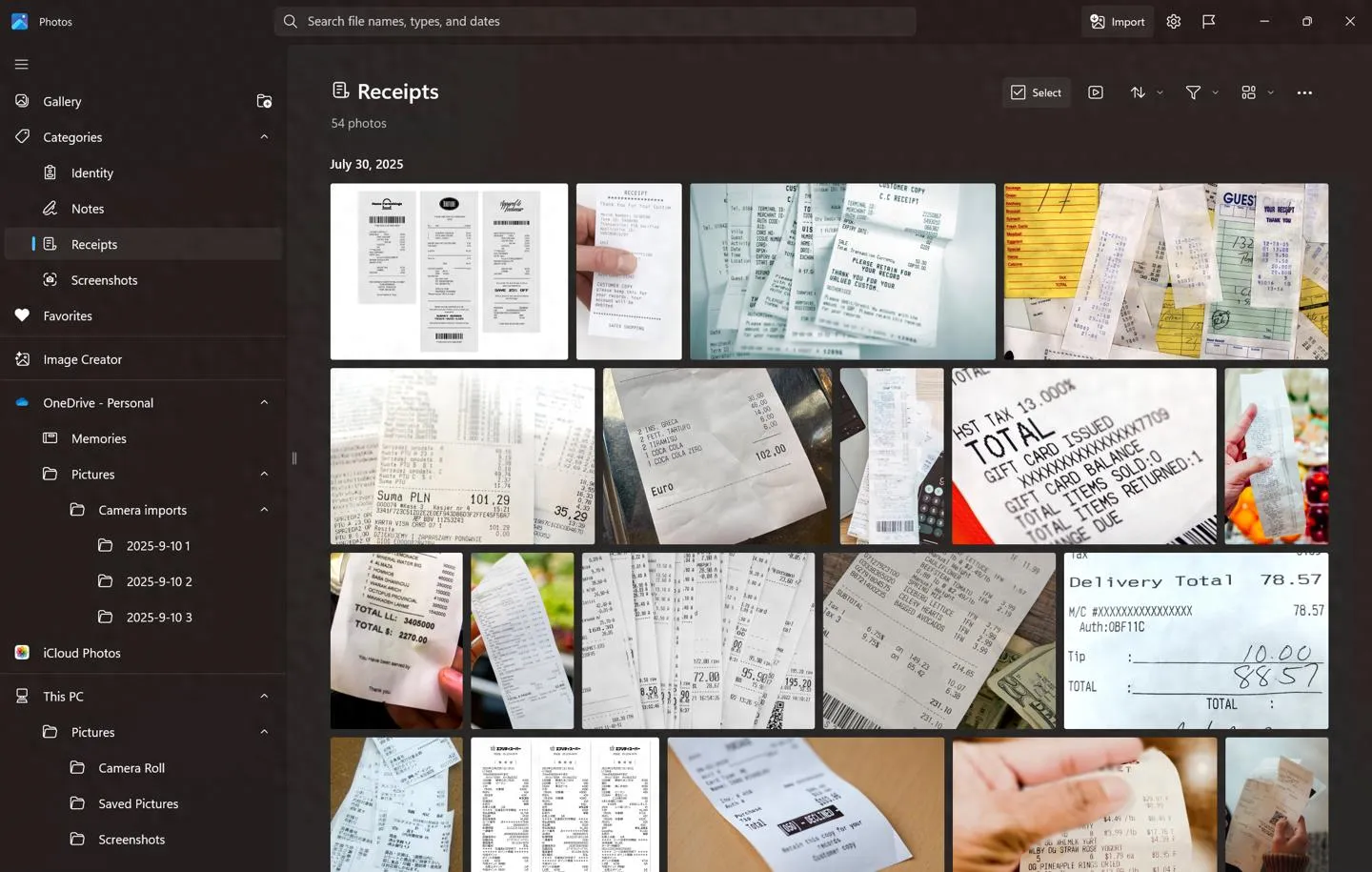
This feature was designed to save users valuable time and reduce visual clutter, thereby enabling more effortless and intuitive browsing and searching within photo libraries.
IT Home reports that this new functionality aims to address the growing complexity and management challenges of photo libraries. Through AI-powered automatic classification, the application intelligently detects and automatically organises users' images into four predefined categories: “Screenshots”, “Receipts”, “ID Documents”, and “Notes”.
Technically, the AI-powered categorisation intelligently groups images based on visual content, such as automatically recognising handwritten notes, printed documents, or shopping receipts. It also boasts extensive language recognition capabilities; for instance, a Hungarian passport bearing non-English text will still be categorised as ‘Passport’.
It should be noted that the AI auto-categorisation feature is currently exclusive to Windows 11 AI+ PCs and initially supports only the four categories mentioned above.
To experience these new features, users must update the Photos app via the Microsoft Store to version 2025.11090.25001.0 or higher. As the update is being rolled out in batches, some users may not receive it immediately.