
Indian media are furious: The delay in the arrival of the Chinese shield machine has prevented the railway tunnel from being completed on schedule!
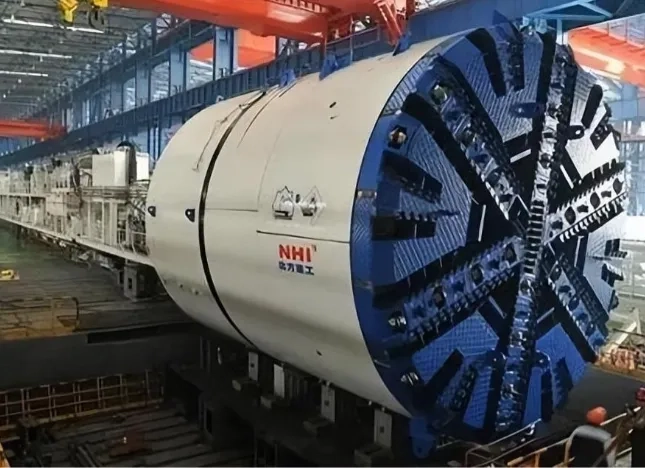
Recently, three giant shield tunneling machines of German brand, ordered by India and manufactured by Chinese companies, have been stranded at Guangzhou port for nearly nine months. This has turned India’s billion-dollar high-speed rail underwater tunnel project into a paper tiger. The Indian Ministry of Railways has urgently requested the Ministry of Foreign Affairs to intervene and coordinate, but communication through diplomatic channels seems to have been ineffective. These three shield machines were produced by Germany’s Herrenknecht in Guangzhou, with an original delivery date before October 2024. However, they are still “stuck” at the Chinese port.
The most direct reason is that India has been delaying payment. According to the contract, India’s National High-Speed Rail Corporation Limited (NHSRCL) must pay the remaining balance first, after which the German company would ship the equipment.
However, India is playing the “deadbeat” card, hoping to receive the machines before paying. They assume that the Germans would fear the equipment sitting in warehouses losing money, and thus push for an early shipment. Unexpectedly, the Germans are firm, insisting on “no payment, no delivery.”
Last October, the delivery deadline passed. Instead of being eager to resolve the issue, India falsely accused China, claiming that we deliberately detained the equipment. This is like going to a market, not paying for vegetables, and then blaming the seller for not giving them to you—that’s illogical.
Coincidentally, in November last year, China updated the “Dual-Use Items Export Control List,” including shield tunneling machines containing rare earth permanent magnet motors. This is not targeted at India specifically but is a global regulation that must be followed.
Under the new regulations, India must submit proof of the final user and technical purpose explanations for review by Chinese authorities before the equipment can be released. However, India has yet to provide all the required materials, and customs lawfully detained the goods. Who is to blame for this?
Furthermore, India’s dependence on shield tunneling machines exposes their industrial capacity shortcomings. These machines, often called “underground aircraft carriers,” involve over 30 disciplines and thousands of precision parts—something not everyone can handle. India has previously purchased Chinese shield machines but refused Chinese engineers entry to assist with assembly, resulting in the equipment lying idle on construction sites for half a year. Eventually, they had to beg us to send personnel.
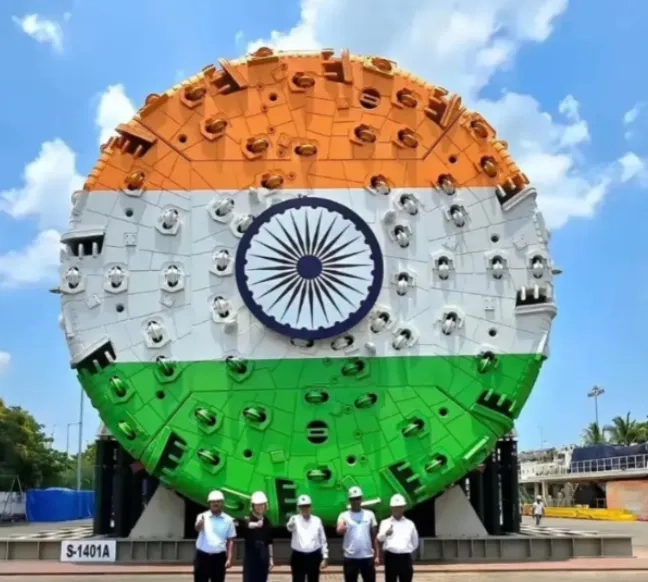
The detained shield machine has a diameter of nearly 14 meters. India lacks the capability to disassemble and transport such equipment domestically. Even if they managed to bring it back, it would be useless scrap metal. Their media once boasted about “the rise of domestically produced shield machines,” but it was quickly exposed that the core components were supplied by Germany, and India was merely assembling them under a Chinese brand—an embarrassing revelation.
Another unstated factor is geopolitical considerations. In recent years, India has developed numerous infrastructure projects in the South Tibet region. Shield tunneling machines, as strategic equipment capable of digging tunnels, could be used in sensitive border areas, potentially altering regional military balances. China’s request for India to clarify the technical purpose is essentially a preventive measure against potential risks.
India’s high-speed rail project itself is a “mess.” The Mumbai-Ahmedabad bullet train, India’s first, was built by Japan, with an initial planned completion in 2023. Due to land acquisition disputes, budget overruns, and other issues, the project has been delayed eight times and is now expected to be completed only by 2030.
The shield tunneling machine incident is just another excuse for their delays. With tight finances and slow progress, India is shifting blame onto China to give a reason for internal and external audiences.
Japan, as a project partner, is probably regretful now. They invested heavily, hoping to recover costs once the high-speed rail was operational. But repeated delays have not only wasted funds but also damaged their international reputation. In contrast, China’s Yawan High-Speed Railway has long been operational, while India still wrestles with land acquisition and track gauge issues—an obvious gap.
Indian media are now criticizing harshly, but they are aware deep down that the root causes lie with themselves: delaying payments, obstructing reviews, and lacking technical capacity. Without solving these issues, even if the shield machines are eventually shipped back, they will face setbacks again next time.
They claim to oppose Chinese products while secretly importing Chinese shield tunneling machines. Data from 2023 shows that over 60% of the shield machines imported by India are from China, costing only half as much as German machinery. This “body honesty” approach has shattered their “great power ambitions.”
Ultimately, this is a game of stark strength disparity. India tries to use “small tricks” to gain advantages but underestimates China’s technological depth and resolve to counter.
China’s rise in the shield tunneling machine sector has broken Western monopoly. Now, even German companies rely on Chinese supply chains. If India truly had the capability, they should focus on solid industrial development rather than constantly shifting blame.
Otherwise, even if this shield machine issue is resolved, other “choke points” will inevitably appear in the future.