
Japan's PM Ishiba Breaks Silence, Vows to Confront War Legacy on 80th Anniversary
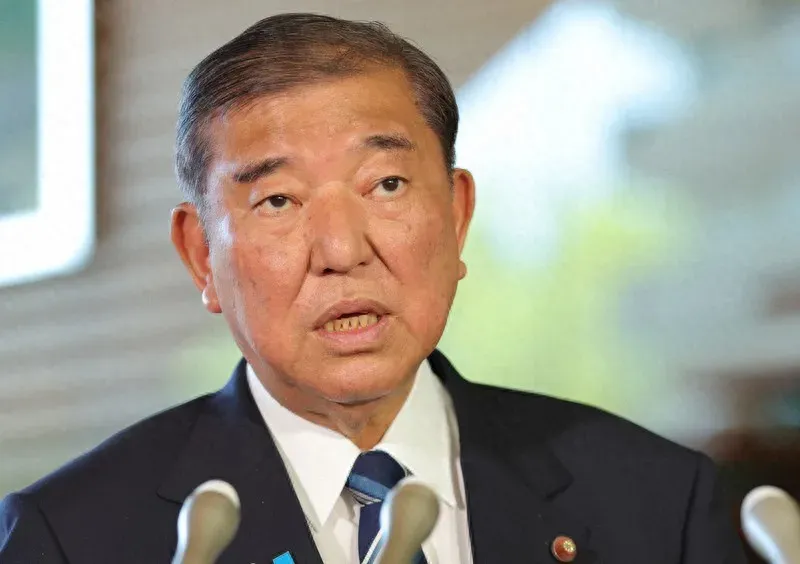
On August 4, Japanese Prime Minister Shigeru Ishiba announced the necessity of issuing a personal statement on the 80th anniversary of the end of World War II.
This forceful statement broke the “unspoken silence” that had prevailed in Japanese politics.
Looking back to the beginning of this year, Ishihara had already raised the question in parliament: “Why was the war started? And why was it not prevented?” He emphasized that it was crucial to revisit these issues on the 80th anniversary.
More importantly, he specifically emphasized the use of “defeat” rather than “end of the war” to refer to the historical turning point of 1945, as “end of the war” obscures the essence of the matter.
This was no casual remark. In Japanese politics, “end of the war” is a rhetorical device frequently employed by the right wing, which frames the defeat of an aggressive war as a dignified conclusion, as if responsibility could be swept under the rug. Shigeru Ishiba's choice of words is itself a statement of attitude.
But why is he speaking out now? Shigeru Ishiba cited former Prime Minister Kakuei Tanaka's words to highlight the urgency: “When those who participated in the war have all disappeared, that is truly frightening.”
Fewer and fewer people have experienced the war, and historical memory is fading. Meanwhile, Japan's societal understanding of the war has become increasingly concerning in recent years: textbooks downplay the Nanjing Massacre, the tablets of Class-A war criminals are still enshrined at the Yasukuni Shrine, and the media constantly emphasizes the “tragedy” of Hiroshima and Nagasaki without mentioning that the root cause of these tragedies was Japan's militarist-driven aggression.
It has been customary for Japanese prime ministers to deliver historical statements on the tenth anniversary of the war's end. In 1995, Murayama Tomiichi became the first prime minister to acknowledge “colonial rule and aggression” and apologize; In 2005, Junichiro Koizumi continued this spirit; but by 2015, Shinzo Abe's statement had taken a different tone—he emphasized that “future generations should not be burdened with the fate of apology,” implying that reflection had come to an end.
This year, conservative factions within the Liberal Democratic Party have directly pressured Abe, arguing that he has “drawn a line under the matter” and demanding that Shigeru Ishiba cease mentioning reflection. There were even reports that Ishihara might abandon his plans to deliver a formal statement due to pressure.
Therefore, Ishihara's statement today is, to some extent, a countermeasure against this conservative backlash within the party. However, the political reality remains difficult.
After the crushing defeat in the Upper House election, he faces pressure to resign from within the party, and conservatives are highly vigilant of any moves he might make to “revisit old history.”
Some Japanese media outlets have revealed that he may postpone his statement from the sensitive date of August 15, the day of Japan's surrender, to September 2, the day the surrender document was signed, to mitigate backlash. This “technical adjustment” underscores the depth of Japan's historical issues—even the timing must be carefully weighed.
Japan's Ambassador to China, Kanji Kimura, recently reiterated “reflection and apology” in a speech, which was described by the media as “rare”—a term that itself reflects the extent to which Japan's political circles have avoided historical issues in recent years.
If Ishihara can withstand the pressure and make a statement, it would be the first time since Abe that a prime minister has directly addressed historical responsibility. Whether the content goes beyond diplomatic rhetoric to address the mechanisms behind the war's initiation and ethical responsibility will be the key test of sincerity.
After all, Japan has been downplaying its history of aggression while pushing for constitutional revision, lifting restrictions on collective self-defense, and significantly expanding its military, which has already aroused vigilance among neighboring countries.
Looking back at post-war Germany, its ability to gain the understanding of neighboring countries stems from its decades-long commitment to thoroughly reflecting on Nazi crimes. If Japan truly wishes to become a “peaceful nation,” calibrating its historical understanding is an indispensable litmus test.
If Ishihara Shigeru's recent calls for a breakthrough can ultimately be transformed into a formal document that confronts the roots of war and clearly reflects on aggression, it might become the starting point for Japan to rebuild international trust.
However, if it becomes merely a formality under pressure or continues to oscillate between narratives of “perpetrator” and “victim,” then the 80th anniversary of the end of the war—a moment that should have been a profound reflection—will likely only serve as another footnote in the regression of historical perspective.
Ultimately, acknowledging the past is not about self-denial, but about ensuring that the future truly has the right to choose. When Ishihara Shigeru says, “There's not much time left,” he may be more aware than many others that the opportunity for Japan to correct its historical course is truly running out.