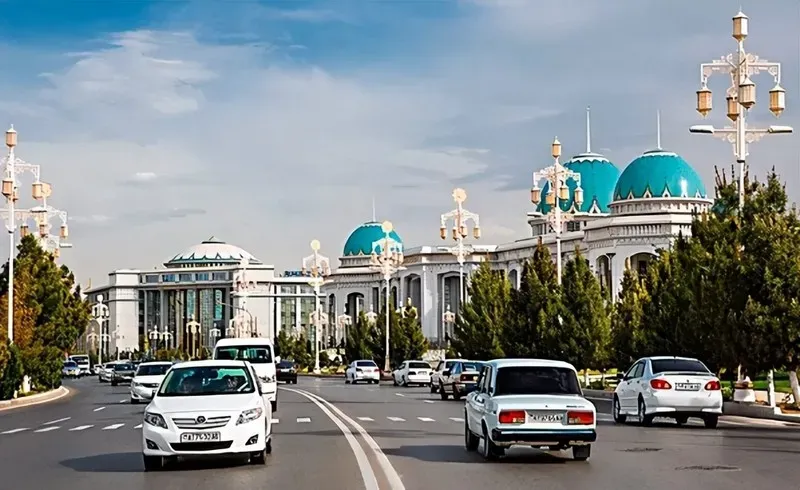

The only permanently neutral country in Asia, where water, electricity, and gas are free nationwide, and gasoline costs around 10 cents per liter.
When it comes to Turkmenistan, many people may be hearing about it for the first time. It is located in Central Asia, sandwiched between Iran, Afghanistan, and Kazakhstan. Most of its territory is desert, and its population is only about six million, roughly the size of a large city.
The title of “Asia's only permanently neutral country” is unique to Turkmenistan, recognized by the United Nations in 1995. This year, 2025, marks the 30th anniversary of this designation, and the United Nations has declared it the “International Year of Peace and Trust.” Turkmenistan is hosting various events to promote this occasion.
In the past, people often mentioned that water, electricity, and gas were free nationwide, and gasoline cost only about one dime per liter. That sounded like a welfare paradise, but the situation has changed. Those policies were established in the 1990s, but due to economic pressure and resource management, free supplies have been gradually phased out, and gasoline prices have risen to around three yuan per liter.
Let's first discuss the historical background of Turkmenistan. It is not a country that suddenly emerged. In ancient times, this region was a key route along the Silk Road, successively occupied by Persians, Mongols, and Arabs. The Turkmen ethnic group gradually formed in the 15th century. In the 19th century, it was annexed by the Russian Empire and lived as a colony, with the people enduring hardships and attempting resistance, though unsuccessfully.
After the Russian Revolution in 1917, it aligned with the Soviet Union, becoming the Turkmen Soviet Socialist Republic in 1924. It developed within the Soviet system, establishing industries, particularly in natural gas and oil extraction. Before the dissolution of the Soviet Union, Turkmenistan had already become a major natural gas producer, with abundant resources that were the envy of many. After gaining independence in 1991, it did not descend into chaos like other Central Asian countries but instead adopted a steady neutral policy, refraining from getting involved in regional conflicts.
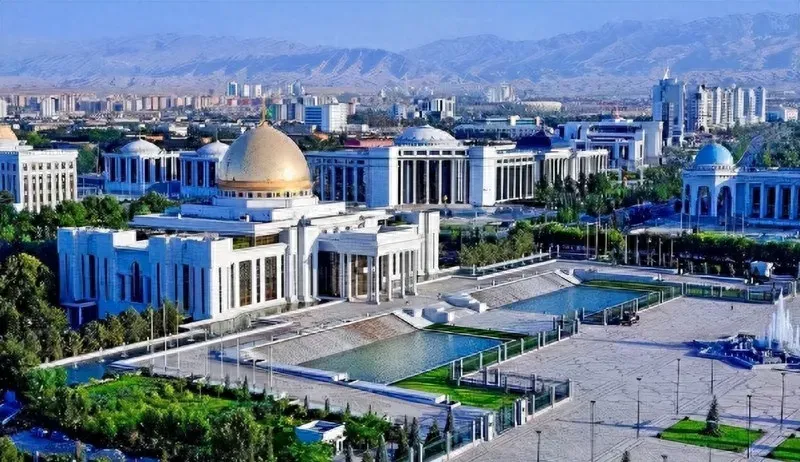
Neutrality is Turkmenistan's defining characteristic. In December 1995, the United Nations General Assembly unanimously adopted a resolution recognizing its permanent neutrality, a first in Asia.
Why neutrality? The surrounding environment is too chaotic: Afghanistan is at war, Iran is under sanctions, and there are numerous territorial disputes with neighboring countries to the north. As a small country with a limited population, it does not want to be dragged into conflicts by major powers. Joining alliances can lead to trouble, such as being controlled like during the Soviet era, so it is better to go it alone. Neutrality means not joining military alliances, not allowing foreign bases, and not taking sides, but it also requires self-reliance, which brings economic challenges.
Over the past three decades, this policy has helped it avoid many troubles, such as the Central Asian color revolutions, which it did not get involved in. Now it is actively promoting peace initiatives, hosting an international forum in 2025 to invite countries to discuss peace and build trust, effectively innovating the concept of neutrality.
Leaders have a significant impact on a nation's direction. The first president, Saparmurat Niyazov, served as Communist Party secretary from 1985, became president after independence, and remained in power until his death in 2006.
Niyazov came from humble beginnings, born in Ashgabat in 1940. He lost his family in an earthquake as a child and became an orphan. He joined the Communist Party, studied engineering, and specialized in energy. After coming to power, he cultivated a cult of personality, dubbing himself “Turkmenbashi” (Father of the Turkmen), erecting statues of himself everywhere, and writing a book titled “Ruhnama,” which was mandated for study nationwide, even appearing on school exams.
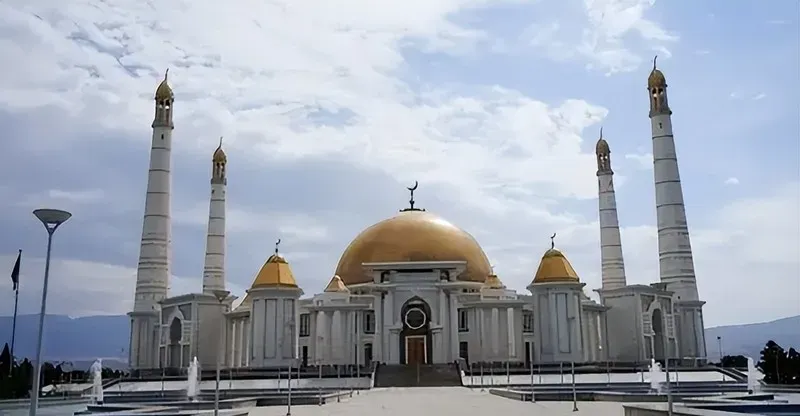
The media was fully controlled, opposition figures were arrested, and dissidents were imprisoned. He banned long hair, gold teeth, and ballet, among other bizarre regulations, and built white marble buildings in the capital, spending money freely. During Niyazov's era, the country was closed off, with no access to the internet and foreign media barred from entering. However, the economy remained stable thanks to natural gas exports, and he used the revenue from these resources to fund welfare programs. Starting in 1993, water, electricity, and gas were free, and gasoline was extremely cheap—at the time, a liter of gasoline cost only about one yuan, so people didn't hesitate to drive.
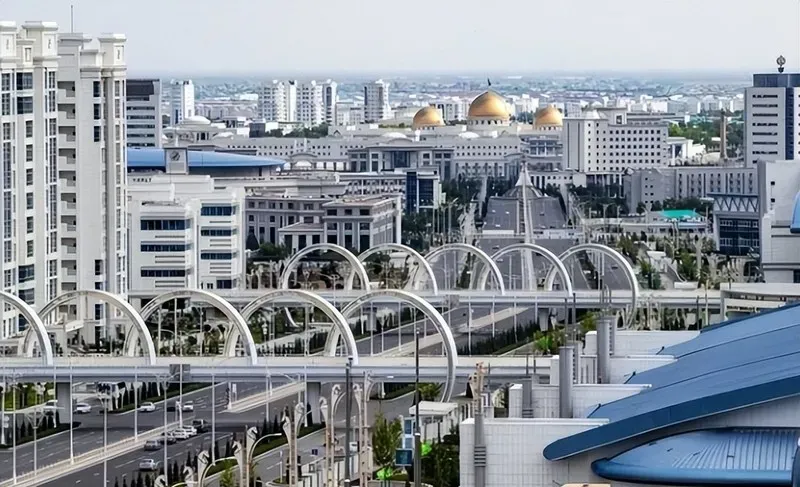
After Niyazov's death, Gurbanguly Berdimuhamedov came to power in 2007 and served as president until 2022. He was originally a dentist and had served as Minister of Health. After taking office, he first abolished the bizarre regulations left behind by Niyazov, such as restoring the normal names of months and no longer using the name of Niyazov's mother.
Berdymukhamedov also engaged in personality cult practices, referring to himself as “Alkadag” (meaning “protector”), erecting statues, writing books, and having the media extol his greatness. Politically, he tightened control, with elections being a facade of democracy, where he consistently received 99% of the vote, and opposition parties did not exist. Economically, he continued to promote natural gas exports, primarily to China and Russia, building pipelines to generate foreign exchange. However, after 2014, oil and gas prices plummeted, straining the national economy and causing foreign exchange shortages, with the black market exchange rate spiraling out of control.
Welfare reforms began, with water, electricity, and gas quotas becoming free up to a certain limit in 2017, with excess usage charged. By 2019, free supply was completely abolished, and now citizens must pay for water, electricity, and gas, though prices remain low, the burden has increased compared to before.
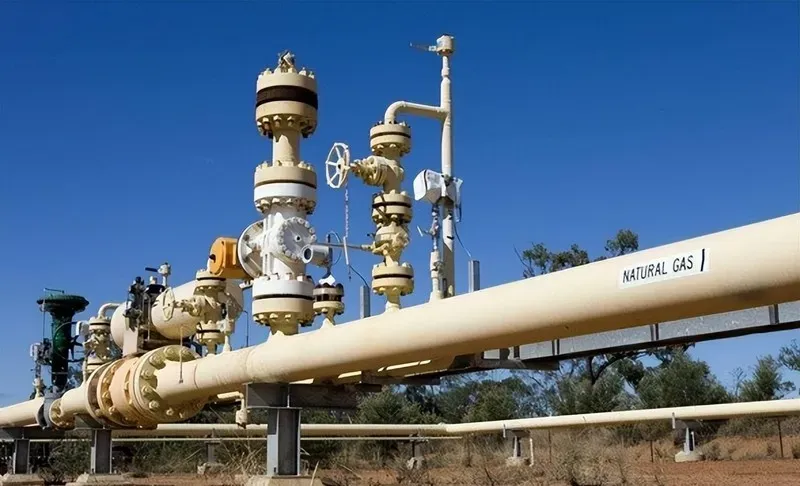
The current president is Serdar Berdimuhamedov, the son of Saparmurat Niyazov, who took office in 2022 and continues his father's policies, with a strong sense of family rule. The 2025 economic report states that GDP grew by 6.3%, driven by natural gas and public investment, but there are many issues. The country has the world's fourth-largest natural gas reserves at 24.6 trillion cubic meters and 20.8 billion barrels of oil, with exports being the lifeblood of the economy. This year, the country signed a gas swap agreement with Turkey, selling 2 billion cubic meters to Iran for onward shipment to Turkey, testing new markets.
The World Bank predicts that growth will slow in 2025, with stable commodity prices but uncertain global demand. After adjustments to welfare policies, living costs for the public have risen, and food subsidies have been cut, leading to occasional queues at stores for cheap grain. The government claims this is for sustainable development, but life remains tough for the lower classes.
Gasoline prices are no longer just a few cents. According to July 2025 data, the price per liter is 1.5 manat, equivalent to 0.428 USD, or approximately 3 RMB. While this is relatively inexpensive globally, ranking among the top ten, it has increased significantly compared to previous levels. Previously, subsidies were substantial, but now the government has tightened restrictions, resulting in higher profits from gasoline exports. Driving is still feasible for the public, but black market gasoline is expensive and of poor quality. Electricity and water are also charged for, with low base rates but high surcharges for excess usage. Water scarcity is a long-standing issue, with the Karakum Desert covering 80% of the country, relying on canal water diversion. The arid climate has led the United Nations to warn that a water crisis could impact neighboring regions, affecting both the economy and politics.
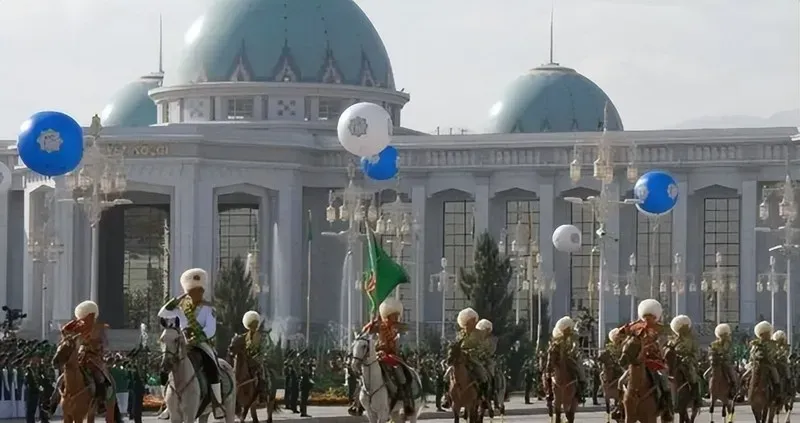
Economically, Turkmenistan still has a strong planned economy, with state-owned enterprises dominating, private enterprises being small, and many rumors of corruption. In June this year, the IMF said that market reforms, a unified currency exchange rate, and efficient public spending were needed, but the government has been slow to act. An investment forum was held in 2025 to attract foreign investment, but the environment is not transparent, and investors are hesitant. Social welfare has shifted toward education and healthcare, with free schools and low-cost hospitals, though the quality is generally poor and there is a shortage of doctors. The internet is strictly regulated, social media is blocked, and citizens face difficulties accessing the internet, leading to information shortages. A human rights report highlights suppression of free speech, low levels of social freedom, strict abortion laws, and a regression in women's rights.
The neutrality policy will shine in 2025, with the United Nations resolution reaffirming its support, Turkmenistan promoting neutrality on its website, and numerous international conferences being held. However, actual neutrality does not mean isolation. It cooperates with the EU and China, signs energy contracts, and joins the Belt and Road Initiative. The challenge is to balance the major powers, with Russia having a large influence, China buying a lot, and US sanctions against Iran affecting it. Internally, the leader's family controls power, which is concentrated, making reform difficult to push through. The economy relies heavily on energy, with diversification remaining a slogan. Agriculture is dominated by cotton, but water scarcity limits production. The population is young, with unemployment a growing concern, leading many young people to seek work abroad.
In summary, Turkmenistan, the only permanently neutral country in Asia, relies on resources and neutrality to survive, but the welfare myth has been shattered. Now, water, electricity, and gas are charged for, and gasoline costs three dollars per liter. The public is adapting to the new reality. Leadership has transitioned from the Niyazov family to the Berdymukhamedov family, maintaining authoritarian style and continuing personality cults, with limited political space. The economy is expected to maintain stable growth by 2025, but deep reforms are needed; otherwise, crises may lurk. Water resources, exchange rates, and corruption are major challenges. The international community views its peace initiatives positively, but human rights issues remain a point of criticism. In practical terms, it resembles a resource-rich heir who has been spending lavishly, but now faces financial constraints and must learn to manage its resources more prudently. Neutrality serves as a protective shield, but internal reforms are necessary; otherwise, superficial appearances alone will not suffice. The future hinges on how it adapts, and the 2025 Peace Year presents an opportunity, but concrete actions are required.